

Empowering India through Atomic Energy


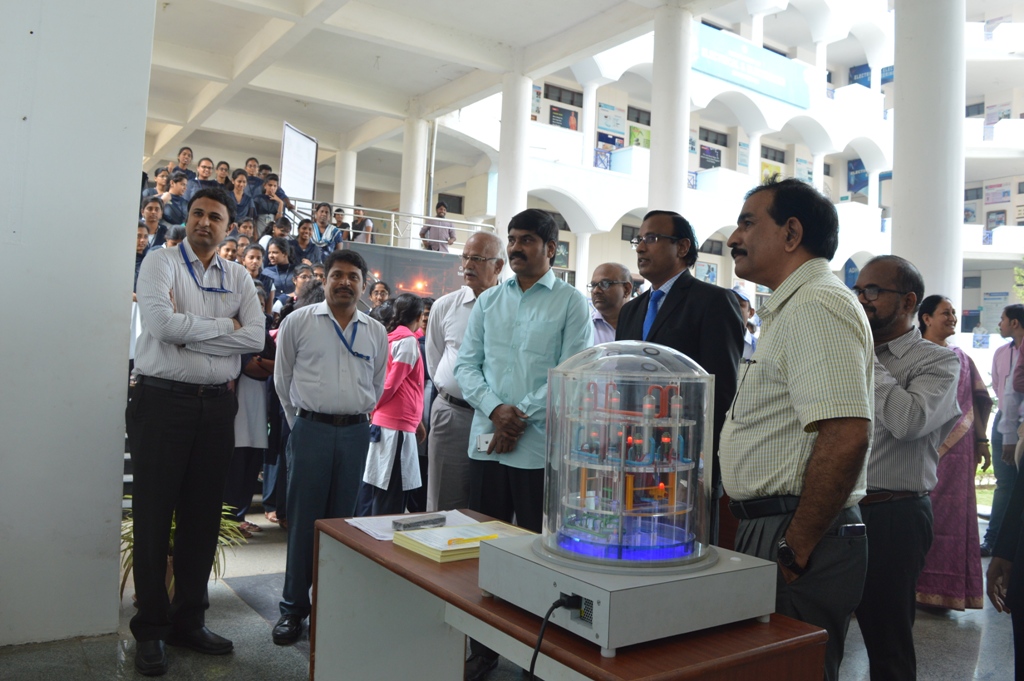
Nuclear Science and technology is the best scientific gift of 20th century to human race. Its applications can be found in practically all parts of the globe and touches almost every aspect of human life. It is helping the mankind in the area of agriculture, energy, health, industry, hydrology, research, drinking water, waste management, environment, crime detection, animal health, natural resource management, exploration of space, security, human resource development, preservation and carbon dating of historical objects, unraveling the natural mysteries, material development, academics and food preservation. It has the outstanding safety track record. There is more than enough uranium, thorium and plutonium to supply the entire world's electricity for several hundred years. But due to three accidents namely The Three Mile Island, The Chernobyl disaster and Fukushima Daiichi, people have fear. The serial failures of cooling and containment systems at the Fukushima Daiichi nuclear power plant in Japan due to emergency power failure by unexpectedly high Tsunami causing damage to the reactor have created doubts in the minds of people. Opponents to nuclear power have relied on certain misconceptions and inaccurate information in making their case against nuclear power. In order to promote long term public awareness of the concepts of nuclear science and technology, there is need to broaden our interaction with electronic and print media. Public misconceptions should be corrected. Dissemination of proper knowledge is very important. The time is ripe for the nuclear community to have a balanced and more holistic information dissemination strategy. In our era, the media have almost complete control over public perception. Public perception of atomic energy is strongly influenced by media coverage of research and development work being carried out by nuclear scientists.
Date and Time
Location
Hosts
Registration
-
 Add Event to Calendar


- Beside VSEZ
- Visakhapatnam, Andhra Pradesh
- India 530049
- Building: Main Block
- Room Number: Abdul Kalam Centre for Nation Building
- Contact Event Host
-
Contact: 8688889898
Speakers
 RKSingh of Bhabha Atomic Research Centre
Nuclear Technology for Sustainable Development
Technological developments and research activities in nuclear establishments are to be disseminated through exhibition, working models and state of the art audio/visual systems. Public acceptance of nuclear energy will be possible if all the safety measures taken are well informed to the society. Nuclear technology & knowledge of excellent work being carried out for the benefit of common man has to be told to the society with accurate information. Its most essential element is to stimulate the interest of youth about nuclear science and technology and inculcating scientific spirit in younger generation at the different school/college levels. Dissemination of this information should help young people in their choice of studies and careers and may serve to demystify nuclear science and technology.
Biography:
Shri R.K. Singh joined Bhabha Atomic Research Centre in 1986 after graduating from 29th batch of BARC training School. He has worked for Design, development, installation, commissioning & maintenance of control instrumentation of 100 MWth Research Reactor, DHRUVA. Shri Singh was on deputation to Narora Atomic Power Station (NAPS) for rehabilitation and commissioning of control instrumentation after fire incident. He has worked for design, installation & commissioning of Physical Protection Systems. He has developed Advanced Instrumentation for flow visualization and Vector field mapping of Advanced Heavy Water Reactor (AHWR) components and Pressurised Heavy Water Reactor (PHWR) components. He is Treasurer, Indian Nuclear Society from April 2012. Shri Singh was Secretary, INS during 2008-2012. He has coordinated INS International Conferences and organised sixty INS National seminars all over India. He has organised/planned- theme meetings, position papers, International conferences, National Seminars, Seminars with other nuclear societies of the world. Presently he is Head, Media Relations and Public Awareness Section, Bhabha Atomic Research Centre and working in the area of development of advanced instrumentation for flow visualization and multiphase flow.
As Head, Media Relations & Public Awareness Section, BARC, he is responsible for planning, overseeing, developing and assessing the entire outreach programme of Bhabha Atomic Research Centre with a holistic approach. He has been instrumental in allaying fears of radiation and nuclear technology among common masses. He is leading BARC media committee of more than 120 young scientists to multiply our efforts of outreach to the public to disseminate knowledge about nuclear sciences all over the country.
Shri R.K. Singh was awarded prestigious Indian Nuclear Society Award; Outstanding Service Award in the area of Science Communication. He was conferred Bharat Jyoti Award by India International Friendship Society for his meritorious services, Outstanding Performance and Remarkable role.
Address:Bhabha Atomic Research Centre , , Mumbai, India
Dr. Kuber Bhainsa of BARC
Nuclear Agriculture & Food Security
While the biggest uses of nuclear technology are related to nuclear power and nuclear weaponry, there are many other uses of nuclear energy, one of them being agriculture. Nuclear technologies are playing a big role in the development of agricultural technologies, helping farming communities increase crop production, control pests and diseases, and improve water quality.
While many people know the impact that nuclear technology has had on the development of electricity and ever increasing population and the need for more food at a quicker pace, we do not often give enough credit to the contributions that radiation has had on increasing the efficiency and yield of our agricultural resources. In looking at the work that has been applied to this broad concept of agriculture through nuclear energy and technology, four main areas of development emerge: the decline of pests, improvement of animal health, increased crop production, and improving food processing. We live in a world where food security can be greatly impacted by harvest failures and the consequential rising of food prices. The use of nuclear technologies is a potential solution to these problems, and many of these solutions are currently being widely used in different agricultural contexts. Genetic modification, pest control using sterilization and water usage control are three main areas of nuclear application in agriculture. Unfortunately, the application of nuclear energy in agriculture is a highly debated, highly politicized issue due to potential contaminations and nuclear waste management, so it is imperative that we work toward a greener nuclear age, where these powerful technologies can be implemented to its full without their challenges and threats.
Biography:
Dr. Kuber Bhainsa is serving as Scientific Officer/F in Nuclear Agriculture and Biotechnology Division, Bioscience Group, BARC, Mumbai,India. He is the recipient of DBT-CREST Award for 2011-12 from Department of Biotechnology, Government of India. He received Best poster Award on "Biochemical mechanism of cadmium tolerance in multi-metal tolerant Pseudomonas soil isolate" in the AMFM section, 54th Annual Conference of Association of Microbiologists of India (AMI-2013), Maharshi Dayanand University Rohtak-124001, Haryana, INDIA.
Dr. Kuber Bhainsa pursued Bachelor’s degree in Zoology in 1990 and M. Sc. In Life sciences (Biochemistry) in 1992 from Sambalpur University, Orissa, India. He received his Post-doctoral studies in Dept. of Environmental Health, University of Cincinnati, USA in 2013, Ph. D. in Biochemistry from University of Mumbai in December 2009. He published 18 Publications in National and International peer reviewed journal and participated 22 in symposium/conference/Workshops. He is a Life Member of Association of Microbiologist pf India and Life Member of Electron microscopy society of India.
Address:NABTD, BARC, Mumbai, India
Agenda
Dissemination of Technological developments and research activities in nuclear establishments.