

Electromagnetic Interference (EMI) and Electromagnetic Compatibility (EMC)


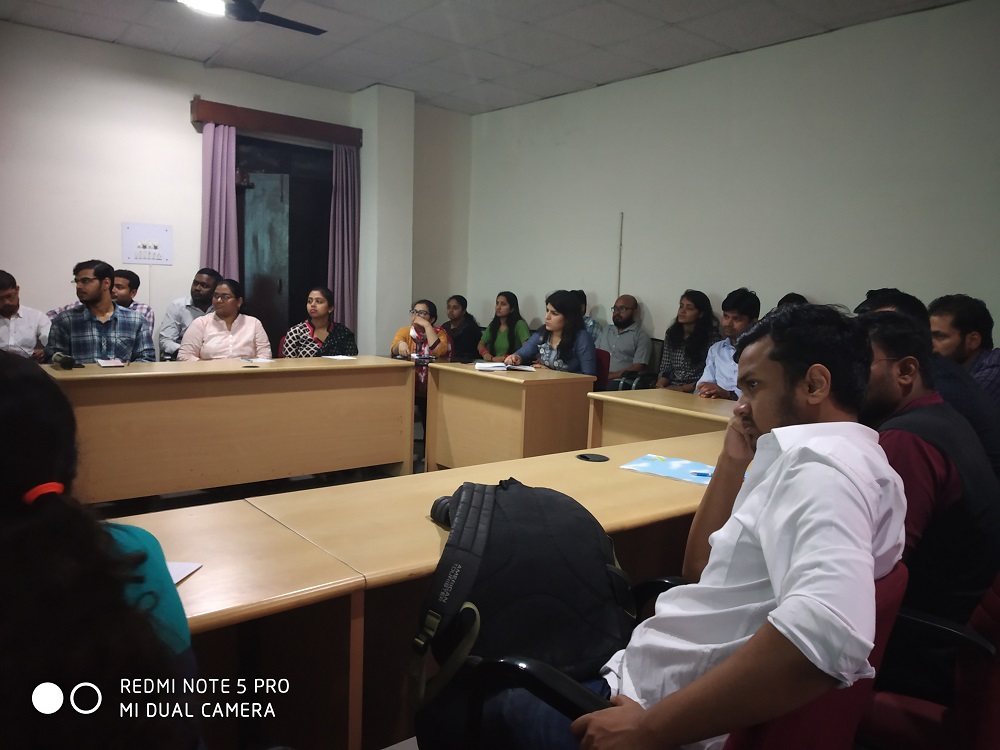
Electromagnetic Interference (EMI) is becoming an exceptionally crucial issue in the era of modern electronics and electrical equipment. All these equipments and systems pose a serious environmental pollution problem in the form of unwanted electromagnetic emission, which is known as Electromagnetic Interference (EMI). An electronic system that is able to function compatibly with other electronic systems and not produce or be susceptible to interface is said to be electromagnetically compatible with its environment. Designing for EMC is not only important for the desired functional performance, but the device must also meet legal requirements in virtually all countries of the world before it can be sold. The transfer of electromagnetic energy (with regard to the prevention of interference) can be divided into four subgroups: radiated emissions, radiated susceptibility, conducted emissions, and conducted susceptibility. To avoid this EMI related problems, different regulatory committees in different countries had specified some standards of electromagnetic emission such as the Federal Communications Commission (FCC) in the US, VDE (Germany), CISPR and IEC (International) and so on. The frequency range of conducted emission standards extends from 450 KHz to 30 MHz and that for radiated emissions begins at 30 MHz and extends to 40 GHz. By measuring the radiated electric field due to that equipment, the compliance of the devices conforming to the standards of interference is tested. The measurement is performed inside an anechoic chamber, Gigahertz Transverse Electromagnetic (GTEM) Cell, shielded chamber or in Open Area Test Site (OATS) which are made free from other electromagnetic radiation by putting the receiver at a specific distance from the device under test. The EMI sensors in common use are dipoles or loop antennas (e.g. Anritsu dipole MP651A / B). The Electromagnetic Group of Department of E & ECE, I.I.T. Kharagpur has been engaged on the studies of analysis, design and development of Gigahertz Transverse Electromagnetic (GTEM) Cell and also different low and high frequency EMI sensors.
Date and Time
Location
Hosts
Registration
-
 Add Event to Calendar


- Conference room
- IIT Roorkee
- Roorkee, Uttaranchal
- India 247667
- Building: ECE
Speakers
 Prof. Ajay Chakrabarty of Indian Institute of Technology Kharagpur
Electromagnetic Interference (EMI) and Electromagnetic Compatibility (EMC)
Biography:
Prof. Ajay Chakrabarty was born in December, 1952. He received the B.Tech., M.Tech., and Ph.D. degrees from the Indian Institute of Technology, Kharagpur, India, in 1975, 1977 and 1982 respectively. He joined the Radar Centre of Indian Institute of Technology, Kharagpur, in 1972. He worked as Assistant Professor in Syracuse University from 1990 to 1992. He was working as a Professor in the Department of Electronics and Electrical Communication Engineering of the same Institute till his superannuation in December 2017. Since September 2006 to September 2007 he worked as Dean Alumni Affairs and International Relations (AA & IR) of IIT Kharagpur. He held the post of Dean of Continuing Education, IIT Kharagpur from October 2007 to June 2010 and H.O.D., Electronics and Electrical Communication Engineering from 15th April 2008 to 8th June 2009. He was Vice Chancellor of BIT Mesra from July 2010 to January 2013. He is the member BOG of IIT Patna for last four years. At present he is serving as adjunct Professor in NIT, Patna.
His research interests include array antenna design, antenna feeds, numerical modeling of waveguide junctions, EMI / EMC measurements, EMI sensors.
He was Recipient of INSA-COASTED Fellowship to attend as an invited Scientist in the 21st general assembly of URSI in Florence, Italy (28 Aug. – 5 Sept. 1984) in the URSI Young Scientist Award Scheme. He was elected Senior Member IEEE in 1990 and reviewer of several journals like IEEE Transactions on Antennas & Propagation. He has one hundred eleven journal publications and many conference publications on numerical modeling of waveguide junctions, slots, diaphragms, antenna feeds, array antenna design, capacitance and electrostatic charge distribution on conduction bodies, EMI/EMC measurements and EMI sensors.
Email:
Address:Department of Electronics & Electrical Communication Engineering, Indian Institute of Technology Kharagpur, , Kharagpur, West Bengal, India, 721 302
Agenda
Electromagnetic Interference (EMI) and Electromagnetic Compatibility (EMC)