

Virtual Distinguished Lecture: "Full Duplex Radios: An Idea Whose Time Has Come To Reality"


!!<36 hrs left to register!!
One of the promising technologies for B5G and future WiFi is full-duplex radio, an innovation that is expected to double spectral efficiency. To realize full-duplex in practice, the main challenge is overcoming self-interference, and to do so, researchers have developed several self-interference cancellation (SIC) techniques. Most prior work has evaluated link-level performances through a real-time prototype. In this talk, I will talk about software defined radio (SDR) based platforms and a new pure-software based approach to design analog active cancellation. I will also discuss a methodology to evaluation system-level performances.
Short speaker bio: Chan-Boung Chae is an Underwood Distinguished Professor in the School of Integrated Technology, Yonsei University, Korea. Before joining Yonsei University, he was with Bell Labs, Alcatel-Lucent, Murray Hill, New Jersey, as a member of technical staff, and Harvard University, Cambridge, Massachusetts, as a postdoctoral research fellow. He received his Ph.D. degree in electrical and computer engineering from the University of Texas at Austin in 2008. He was the recipient/ co-recipient of the National Academy of Engineering of Korea (NAEK) Award, IEEE INFOCOM Best Demo Award, IEEE WCNC Best Demo Award, IEEE DySpan Best Demo Award, IEEE/KICS Jour. of Comm. Net. Best Paper Award, IEIE/IEEE Joint Award, IEEE Signal Proc. Mag. Best Paper Award, IEEE Dan. E. Noble Fellowship Award. He is an EiC of IEEE T-MBMC and an IEEE Distinguished Lecturer.
Date and Time
Location
Hosts
Registration
-
 Add Event to Calendar


Loading virtual attendance info...
- Starts 09 October 2020 01:00 PM UTC
- Ends 21 October 2020 06:00 PM UTC
- No Admission Charge
Speakers
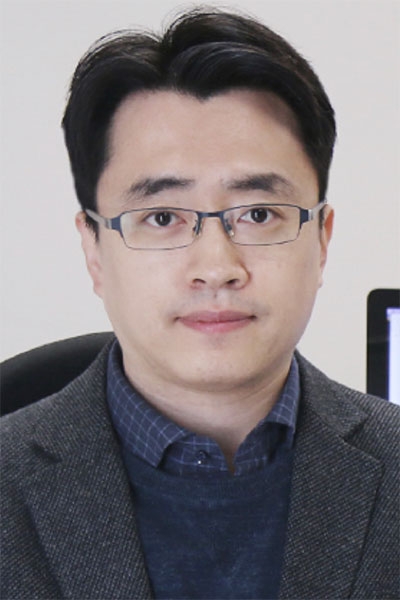 Dr. Chan-Byong Chae of Yonsei University
"Full Duplex Radios: An Idea Whose Time Has Come To Reality"
One of the promising technologies for B5G and future WiFi is full-duplex radio, an innovation that is expected to double spectral efficiency. To realize full-duplex in practice, the main challenge is overcoming self-interference, and to do so, researchers have developed several self-interference cancellation (SIC) techniques. Most prior work has evaluated link-level performances through a real-time prototype. In this talk, I will talk about software defined radio (SDR) based platforms and a new pure-software based approach to design analog active cancellation. I will also discuss a methodology to evaluation system-level performances.
Biography:
Chan-Byoung Chae is an Underwood Distinguished Professor in the School of Integrated Technology, College of Engineering, Yonsei University, Korea. He was with the Department of Electrical Engineering, Stanford University, CA, USA as a Visiting Associate Professor in 2017. He was a Member of Technical Staff (Research Scientist) at Bell Laboratories, Alcatel-Lucent, Murray Hill, NJ, USA from June 2009 to Feb 2011. Before joining Bell Laboratories, he was with the School of Engineering and Applied Sciences at Harvard University, Cambridge, MA, USA as a Post-Doctoral Research Fellow. He received the Ph.D. degree in Electrical and Computer Engineering from The University of Texas (UT), Austin, TX, USA in 2008, where he was a member of the Wireless Networking and Communications Group (WNCG). Prior to joining UT, he was a Research Engineer at the Advanced Research Lab., the Telecommunications R&D Center, Samsung Electronics, Suwon, Korea, from 2001 to 2005. While at Samsung, he participated in the IEEE 802.16e and 3GPP standardization, where he made several contributions and filed a number of related patents. His current research interests include wireless mobile networks and nano (molecular) communications.
He is now an Editor-in-Chief of the the IEEE Trans. on Molecular, Biological, and Multi-scale Communications and a Senior Editor of the IEEE Wireless Communications Letters. He has served/serves as an Editor for the IEEE Communications Magazine (2016-present), the IEEE Trans. on Wireless Communications (2012-2017), the IEEE Trans. on Molecular, Biological, and Multi-scale Comm. (2015-present), the IEEE Wireless Communications Letters (2016-present), the IEEE Trans. on Smart Grid (2010-2011), the IEEE ComSoc Technology News (2014), and the IEEE/KICS Jour. of Comm. Networks (2012-present). He has been a Guest Editor for the IEEE Journal on Selected Areas in Communications (special issue on molecular, biological, and multi-scale communications) 2014-2015 and the IEEE Access (special section on molecular communication networks).
Dr. Chae was the recipient/co-recipient of the IEEE WCNC Best Demo Award in 2020, the Best Young Engineer Award from the National Academy of Engineering of Korea (NAEK) in 2019, the Outstanding Achievement Award in Education from Yonsei University in 2019, the IEEE DySPAN Best Demo Award in 2018, the IEEE/KICS Journal of Communications Networks Best Paper Award in 2018, the Outstanding Achievement Award (Highly Cited Researcher) from Yonsei University in 2018, the Award of Excellence in Leadership of 100 Leading Core Technologies for Korea 2025 from NAEK in 2017, the Underwood Distinguished Professor Award in 2016, the Outstanding Teaching Award in 2017 from Yonsei University, the Yonam Research Award from LG Yonam Foundation in 2016, the Outstanding Professor Award from IITP in 2016, the Best Young Professor Award from the College of Engineering, Yonsei University in 2015, the IEEE INFOCOM Best Demo Award in 2015, the IEIE/IEEE Joint Award for Young IT Engineer of the Year in 2014, the KICS Haedong Young Scholar Award in 2013, the IEEE Signal Processing Magazine Best Paper Award in 2013, the IEEE ComSoc AP Outstanding Young Researcher Award in 2012, the IEEE VTS Dan. E. Noble Fellowship Award in 2008, two Gold Prizes (1st) in the 14th/19th Humantech Paper Contests, and the KSEA-KUSCO scholarship in 2007. He also received the Korea Government Fellowship (KOSEF) during his Ph.D. studies.
Email:
Address:Seoul, Seoul, South Korea