

IEEE Webinar: Next Generation Metasurfaces: Multiband Passive Metasurfaces for Arbitrary Amplitude and Phase Control


IEEE MTTS/APS/EDS/Photonics Southeastern Michigan Chapter IV
Special Seminar
Title: Next Generation Metasurfaces: Multiband Passive Metasurfaces for Arbitrary Amplitude and Phase Control
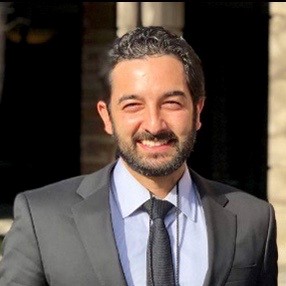
Speaker: Dr. Jordan Budhu, University of Michigan
Abstract:
Recent advances made in the design of multiband passive metasurfaces for arbitrary amplitude and phase control are presented. Normally, to generate an arbitrarily defined aperture field phased array technologies are used. These technologies are generally lossy and complicated to fabricate requiring multilayered Printed Circuit Boards (PCB). The PCBs contain vias connecting the radiating elements to the phase and amplitude shifting Integrated Circuits (IC) on the backside. What if the same aperture field control could come from a patterned metal surface, with no ICs, vias, or circuitry? The patterning of the cladded substrate is carefully engineered to generate the desired aperture field in a fully passive manner. When the local power density associated with the scattered field is not equal to that of the incident field, then power must be either locally absorbed or added to satisfy power conservation leading to active and/or lossy surfaces. By designing metasurfaces that support surface waves to carry power transversally, local power density can be conserved using a fully passive surface. In this way, both the amplitude and phase at every point on the metasurface can be designed from the superposition of reflected and surface wave fields. In this talk, the synthesis of these metasurfaces and the physics behind their operation will be presented. Multiband operation resulting from adding degrees of freedom in the form of additional layers will also be discussed. Fast numerical optimization algorithms will be outlined which facilitate the design of the optimal surface impedance required to achieve passivity. Finally, a glimpse into applying the design principles to conformal 3D geometries will be offered. These metasurfaces allow arbitrary amplitude and phase transformations at any combination of arbitrarily defined frequencies from arbitrarily shaped surfaces. The work will enable the next generation carpet cloaks, electromagnetic illusions, multiwavelength holograms, and multiband antennas, all from simple passive patterned metal surfaces.
Biography:
Jordan Budhu received his M.S. degree in electrical engineering from the California State University, Northridge, California, USA, in 2010, and the Ph.D. degree in electrical engineering from the University of California, Los Angeles, California, USA, in 2018.
He is currently a Research Fellow in the Radiation Laboratory at the University of Michigan, Ann Arbor, Michigan, USA. In 2011 and 2012, he was a Graduate Student Intern at the NASA Jet Propulsion Laboratory. In 2017, he was named a Teaching Fellow at the University of California, Los Angeles. Since 2019, he has been a Lecturer in the Department of Electrical and Computer Engineering at the University of Michigan, Ann Arbor. His research interests are in metamaterials and metasurfaces, computational electromagnetics algorithms for metamaterial and metasurface design, 3D printed inhomogeneous lens design, CubeSat antennas, reflectarray antennas, scattering from inhomogeneous, anisotropic materials, and antenna theory.
Dr. Budhu’s awards and honors include the 2010 Eugene Cota Robles Fellowship from UCLA, the 2012 Best Poster award at the IEEE Coastal Los Angeles Class-Tech Annual Meeting, the 2018 UCLA Henry Samueli School of Engineering and Applied Science Excellence in Teaching Award, and the first place award for the 2019 USNC-URSI Ernst K. Smith Student Paper Competition at the 2019 Boulder National Radio Science Meeting.
 Add Event to Calendar

