

Student Seminar Series: Event #1


This is the first installment of a student seminar series, where University of Calgary graduate students will showcase their research in the fields of Antennas, Microwaves, and Communications in short seminars and compete for prizes for the best presenters.
Date and Time
Location
Hosts
Registration
-
 Add Event to Calendar


- Calgary, Alberta
- Canada
- Building: ICT
- Room Number: 516
- Starts 09 May 2022 05:55 AM UTC
- Ends 12 May 2022 05:00 PM UTC
- No Admission Charge
Speakers
 Lisa Zhou
Physical Layer Security-based Relay Selection for 5G enabled Autonomous Driving
Autonomous vehicles (AV) are the natural extension of active safety technology. 5G enables self-driving cars (SDC) to communicate with ultra-reliable, low latency communications. Still, the challenges for SDC’s are just starting. Traffic infrastructure, such as intersections, need SDC’s to make a multitude of decisions to pass through safely. Using relay vehicles to communicate information prior to reaching the intersection is one way to ensure a vehicles safe passage. In addition, security threats from passive eavesdroppers in the environment provide an added layer of difficulty. Eavesdroppers are a serious threat because they steal information and use it for nefarious purposes. Physical layer security (PLS) can be used to enhance cryptographic techniques. Enhancing communication with PLS effectively protects information from eavesdroppers. These two issues of relay communication and security are what my research focuses on. This research investigates how secure communication in the presence of multiple passive eavesdroppers can be achieved with multiple relay nodes. The goal is to transmit information from the source to destination SDC with cooperative communication. In addition, the optimal communication path must also be chosen as an optimization problem such that the source and destination achieve the best possible secure communication. Advancing the security of relaying between SDC’s will ensure that people have power over privacy without compromising security.
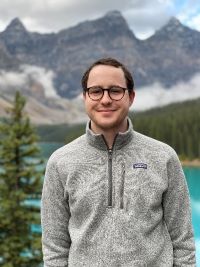 Brendon Besler
Microwave Tomography for Hydration Assessment in Veterinary Applications
Hydration is an important aspect of animal health as water is a vital nutrient used in many physiological processes. Newborn cattle can become critically dehydrated due to illness. Recent work has shown microwave sensing is a promising non-invasive method of hydration assessment due to the close relationship between the bulk permittivity of biological tissues and their water content. Microwave tomography, which uses model-based reconstruction to generate quantitative images of tissue dielectric properties, is one method of detecting changes in permittivity due to hydration. While most microwave tomography work focusses on recovering high-resolution images, hydration assessment requires lower-resolution images leading to simpler image reconstruction and measurement equipment.
A brief overview of microwave tomography for hydration assessment is presented. The theoretical background of microwave hydration assessment is provided. An overview of the non-linear image reconstruction algorithm is presented. Recent proof of concept results from simulation are presented for animal hydration assessment. Challenges related to the practical application of microwave tomography for hydration assessment and future work including measurement of tissue dielectric properties and wearable form factor are discussed.