

Student Seminar Series: Event #2


This is the second installment of a student seminar series, where University of Calgary graduate students will showcase their research in the fields of Antennas, Microwaves, and Communications in short seminars and compete for prizes for the best presenters.
Date and Time
Location
Hosts
Registration
-
 Add Event to Calendar


- Calgary, Alberta
- Canada
- Building: ICT
- Room Number: 516
- Starts 20 May 2022 03:00 PM UTC
- Ends 26 May 2022 05:00 PM UTC
- No Admission Charge
Speakers
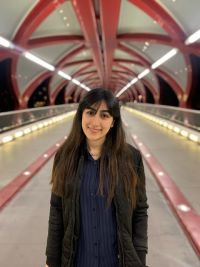 Hanieh Kiani
Active loaded Rotman lens antenna for ITS backscattering applications
A major challenge for automotive radar sensors in Intelligent Transportation Systems is establishing a secure connection in inclement weather conditions. During precipitation, suspended particles in the air tend to interfere with the signal traveling between two nodes in the network, making the target almost invisible. This Study proposes an active-loaded Rotman lens antenna to address this phenomenon. Although the Rotman lens has been widely employed in backscattering applications, its passive performance poses severe gain constraints. In the novel structure we present, custom-designed reflection amplifiers have been added to the lens as the active load. The gain and phase of the amplifiers can be tuned independently to optimize the overall system performance. Incorporating this active component into the well-known Rotman lens structure enables gain amplification and modulation, to improve system’s detectability. This low-profile device that is specifically designed for applications requiring high backscattering gain, such as ITS, is easily adaptable to automotive radar frequency ranges. It can be deployed on vehicles and infrastructure in the ITS framework to enhance communication efficiency and open up new capabilities in mm-wave frequency backscattering communications.
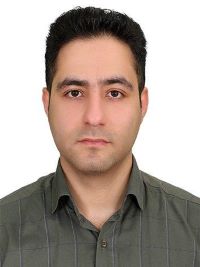 Reza Jafari
Maximizing Secondary Users’ Sum-Throughput in an In-Band Full-duplex Cognitive Wireless Powered Backscatter Coms Network
My research is about secondary users' sum throughput in an in-band full-duplex cognitive wireless powered backscatter communication network. The secondary network consists of a hybrid access point (H-AP) and a finite number of geographically distributed secondary backscatter sensors (SBSs), each capable of using either the conventional or backscatter communication. The secondary network shares the primary network's spectrum using an underlay spectrum sharing model. In this model, the H-AP and SBSs operate in in-band full-duplex (I-FD) mode to achieve improved spectral and time efficiency. Moreover, when an SBS has little available energy, it switches to the low-energy consumption backscatter method instead of the conventional transmission method. The goal is to maximize the sum throughput of the SBSs. It is shown that such a problem is a convex optimization problem. Closed-form expressions for the optimal allocated time and energy to SBSs are derived and solved via a low complexity and efficient algorithm called joint optimal time and energy allocation (JOTEA). Numerical results illustrate that the JOTEA algorithm achieves a higher sum throughput than the benchmark equal time allocation method. Further, if the self-interference cancellation circuit considerably cancels self-interference in the H-AP, the I-FD mode achieves a higher sum-throughput performance than that of the half-duplex mode. Moreover, using backscatter communication results in a further increase in the sum throughput.