

Special Double Feature Presentations "Q-carbon as a Field Emission Electron Source” & "Development of Emotion Recognition with ML Techniques and Challenges"


Austin ComSoc/SP/CtSoc and Computer/EMBS joint chapters would like to invite you to attend a Special Double Feature Presentations
"Q-carbon as a Field Emission Electron Source”
By
Dr. Ariful Haque
Assistant Professor of Electrical Engineering
Ingram School of Engineering, Texas State University, San Marcos, TX 78666 USA
and
"Development of Emotion Recognition with ML Techniques and Challenges"
By
Dr. Damian Valles
Assistant Professor of Electrical Engineering
Ingram School of Engineering, Texas State University, San Marcos, TX 78666 USA
Zoom info
Topic: IEEE Zoom Meeting
Time: Aug 25, 2022 06:00 PM Central Time (US and Canada)
Join Zoom Meeting
https://zoom.us/j/96166939327?pwd=eVZzS2d3ckZvNE1SdkFHc2EvMzlLZz09
Meeting ID: 961 6693 9327
Passcode: 986777
One tap mobile
+13462487799,,96166939327# US (Houston)
+16694449171,,96166939327# US
For any additional information, please send an email to
f.behmann at f.behmann@ieee.org
Date and Time
Location
Hosts
Registration
-
 Add Event to Calendar


Loading virtual attendance info...
- Starts 21 August 2022 10:53 PM UTC
- Ends 25 August 2022 10:00 PM UTC
- No Admission Charge
Speakers
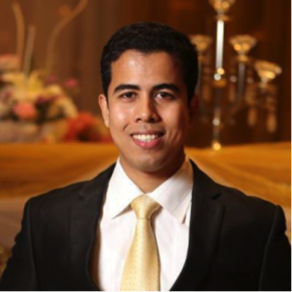 Dr. Ariful Haque, Assistant Professor of Electrical Engineering, Ingram School of Engineering, Texas State University of Texas State University
Q-carbon as a Field Emission Electron Source
Recently, the Q-carbon, short for quenched carbon, have been demonstrated to possess remarkable mechanical and electronic properties, in particular, for field emission applications. We use fundamentally non-equilibrium pulsed laser deposition and pulsed laser annealing processes for the formation of novel quenched solid phase of carbon (Q-carbon) at room temperature and atmospheric pressure. The electron field-emission devices that we fabricate by the laser processed carbon structures have shown excellent electric field enhancement, very low turn-on electric fields, and high emission current densities over long periods with tremendous stability even at high temperatures. The turn-on field required to draw an emission current density of 1 μA/cm2 is found to be 2.4 V/μm. The Q-carbon films show excellent electron emission stability as a function of time. The microstructure and morphology of the field emitting Q-carbon films were analyzed by a variety of techniques, including field emission scanning electron microscope, Raman spectroscopy, and atomic force microscopy. Our results show a very high emission current density value of ~30 μA/cm2 at an applied electric field of 2.65 V/μm, which is hysteresis-free and stable. The generated emission current has been found to have low fluctuations (<4%) and shows no generation of defects during repeated emission measurements on the sample. Along with the excellent emission stability, the Q-carbon composite structure demonstrates outstanding thermal sensitivity during field emission tests, which can open new frontiers for applications in sensor and heat-controlled electron sources.
Biography:
Dr. Ariful Haque is an Assistant Professor of Electrical Engineering in the Ingram School of Engineering at Texas State University. He also holds an appointment in the Materials Science, Engineering & Commercialization program at Texas State. Prior to joining TXState, he worked as a Technology Development Mod. & Integr. Yield Engineer in the Logic Technology Development (LTD) division at Intel Corporation in the USA, where he aided in developing next-generation semiconductor process technology. He received Ph.D. degrees in two different majors, i.e., Electrical Engineering (EE) and Materials Science & Engineering (MSE), from North Carolina State University (NCSU). He was also a research assistant in the National Science Foundation Center for Advanced Materials and Smart Structures at NCSU. During his Ph.D., he investigated the fabrication, characterization, and optimization of carbon-based and III-nitride-based semiconductor materials and devices. He completed the Master of Nanoengineering degree from NCSU, focusing on nanoelectronics and nanophotonics. He holds another MS degree in Materials Science from Missouri State University (2015). His bachelor’s degree is in Electrical & Electronic Engineering from Bangladesh University of Engineering & Technology in 2012. Dr. Haque has published over 35 articles in journals and IEEE transactions, 6 proceedings papers, and given over a dozen of conference presentations and invited talks at reputed international conferences and universities worldwide.
Address:San Marcos, Texas, United States, TX 78666
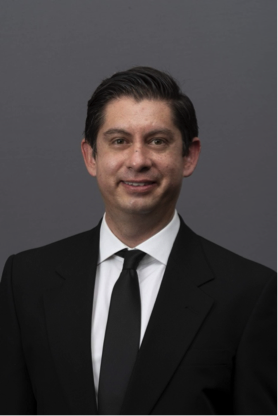 Dr. Damian Valles, Assistant Professor of Electrical Engineering of Ingram School of Engineering, Texas State University
Development of Emotion Recognition with ML Techniques and Challenges
The unmet service tool for children with autism spectrum disorder (ASD) is the lack of tools that help them recognize or teach them to understand human emotions. Like many children with ASD, the target population prefers or focuses on handheld devices that provide graphical interphases that capture their attention. Our current effort is developing an app tool that will help them recognize and understand the human emotions of people with whom they interact daily. The emotions are classified and detected by the facial, speech, and body-gesture motions when interacting with someone. The app will be supported via Machine and Deep Learning models that discretely recognize emotions based on different human traits. The app will respond and provide an emoticon to the screen to indicate the recognized feelings based on the AI models' overall outcomes. Over time, the app's utilization can offer children and adolescents a tool to develop skills and identify patterns in the emotional state of people they interact with using models that account for different ethnic backgrounds. The recognition and understanding over the life span can provide better communication with parents and caretakers at a level that might have been otherwise difficult to convey if someone was happy or upset with them or about anything else. The overall objective is to develop a tool available for all to use on mobile or handheld devices and improve human emotions' communication and recognition skills over time. However, these models provide a biasing and usually incorrect recognition of how people interpret emotions. This is because datasets are typically represented with actors or exaggerated samples. Emotions also depend on cultural backgrounds and other aspects of our brain that help interpret complex behaviors. Our study will continue to explore the environment, timing, and other features that help recognize human emotions.
Biography:
Dr. Damian Valles is an Assistant Professor for the Ingram School of Engineering at Texas State University. He focuses on High-Performance Computing (HPC), Machine Learning (ML), and Embedded System implementations under the High-Performance Engineering (HiPE) research group. Dr. Valles received his B.S., M.S, and PhD. from The University of Texas at El Paso from the Electrical and Computer Engineering Department, focusing on Reconfigurable Processors and HPC research. Dr. Valles did a post-doc at Montana Tech as the HPC Application Scientist under the Computer Science department. He also worked as an HPC System Administrator in the Information Systems department and an adjunct position in the Computer Science department at Wake Forest University. He is currently a member of IEEE, ACM, ACM's SIGHPC, and SHPE.
Address:San Marcos, Texas, United States, TX 78666