

Reconfigurable Intelligent Edges: Illuminating the Shadow Region in Wireless Networks


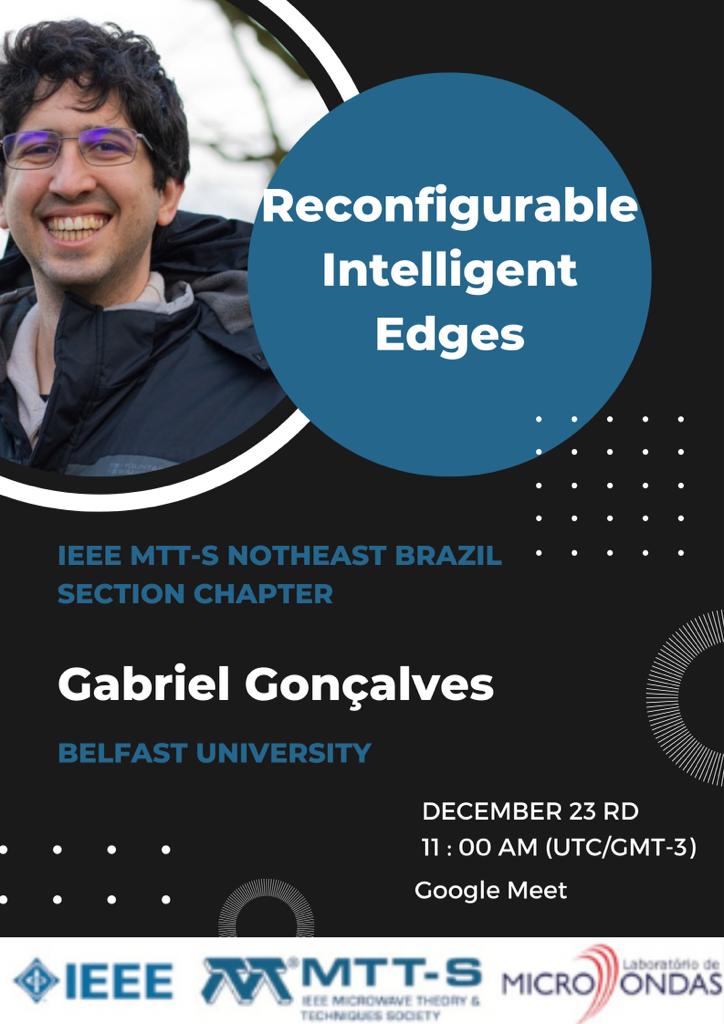
The work proposes a new wireless enabling technology for future smart radio environments. The approach aims to enhance signal coverage within the shadow region(s) of wireless networks with the aid of so-called ‘reconfigurable intelligent edges (RIEs)’. RIEs may be installed at the fringes of shadowing objects such as buildings, walls and other obstacles which obscure the optical signal path from a transmitter to a receiver. We investigate two approaches to illuminating the shadow region in wireless networks using RIEs that exploit refraction or diffraction, operating in passive or active mode. The operation of RIE-assisted communications are investigated, in particular the ways they can redirect electromagnetic energy towards regions with little or no wireless network coverage. Following from this, a number of variations of RIEs are tested in real-world scenarios which consider illuminating the shadow region behind high-rise buildings, first in a city center, and then along a shoreline. Refractive RIEs in particular, are shown to provide significant gains compared to the case when no RIEs are involved, enhancing signal reception in the shadow region at street level behind a high-rise building by as much as 12 dB. Summary gain statistics are provided so that they can be easily included in system-level analyses and simulations. Critically, it is shown that reconfigurable intelligent edges offer a low complexity and cost-effective solution for improving connectivity in shadowing-limited environments.
Date and Time
Location
Hosts
Registration
-
 Add Event to Calendar


Loading virtual attendance info...
- Starts 18 December 2022 10:00 AM UTC
- Ends 23 December 2022 01:00 PM UTC
- No Admission Charge
Speakers
Gabriel Gonçaves Machado of UFPE
Reconfigurable Intelligent Edges: Illuminating the Shadow Region in Wireless Networks
The work proposes a new wireless enabling technology for future smart radio environments. The approach aims to enhance signal coverage within the shadow region(s) of wireless networks with the aid of so-called ‘reconfigurable intelligent edges (RIEs)’. RIEs may be installed at the fringes of shadowing objects such as buildings, walls and other obstacles which obscure the optical signal path from a transmitter to a receiver. We investigate two approaches to illuminating the shadow region in wireless networks using RIEs that exploit refraction or diffraction, operating in passive or active mode. The operation of RIE-assisted communications are investigated, in particular the ways they can redirect electromagnetic energy towards regions with little or no wireless network coverage. Following from this, a number of variations of RIEs are tested in real-world scenarios which consider illuminating the shadow region behind high-rise buildings, first in a city center, and then along a shoreline. Refractive RIEs in particular, are shown to provide significant gains compared to the case when no RIEs are involved, enhancing signal reception in the shadow region at street level behind a high-rise building by as much as 12 dB. Summary gain statistics are provided so that they can be easily included in system-level analyses and simulations. Critically, it is shown that reconfigurable intelligent edges offer a low complexity and cost-effective solution for improving connectivity in shadowing-limited environments.
Biography:
He holds a degree in Electrical-Electronic Engineering from the Federal University of Pernambuco (2016) and a PhD in Electrical and Electronic Engineering - Queens University Belfast (2020). He is currently a postdoctoral fellow at the Center for Wireless Innovation (CWI) at the Institute of Electronics, Communications and Information Technology at Queens University Belfast. He has experience in Electrical Engineering, with emphasis on Electromagnetic Theory, Microwaves, Wave Propagation, Antennas, working mainly on the following topics: electromagnetic propagation, antennas, frequency selective surfaces, microwave absorbers and metamaterials.
Email:
Address:Teixeira Pinto, 38,, ap. 504, Belfast, Ireland, 52050-240