

NEW HORIZONS IN REMOTE SENSING: BASICS AND BEYOND


NEW HORIZONS IN REMOTE SENSING: BASICS AND BEYOND

The Bangalore Section IEEE GRSS Chapter, established on 24 December 2012, unites like-minded IEEE members interested in satellite remote sensing and geographical information science (GISci). It aims to raise awareness among existing IEEE members and scientists/engineers at institutions like ISRO about GRSS activities and encourage GRSS memberships. The chapter conducts one-day workshops on geoscience and remote sensing topics, promotes contributions to IEEE GRSS journals, and organizes short courses for postgraduates, scholars, researchers, faculty, and industry professionals.
The Summer School on Remote Sensing focuses on gathering data about objects from a distance using mechanical devices called remote sensors. These sensors use advanced technology to collect information accurately and efficiently without physical contact. The field of remote sensing is employed by geographers to monitor and measure phenomena in the lithosphere, biosphere, hydrosphere, and atmosphere of Earth. Remote sensing imagery finds diverse applications in mapping land-use, agriculture, forestry, city planning, archaeology, military observation, and more. Advanced methods of AI and ML are utilized to handle the challenges of big data in remote sensing images, particularly for efficient classification. The proposed online summer school aims to teach participants the application in remote sensing data analysis, even for those with limited background knowledge in the field. It aims to equip attendees with practical software tools to tackle remote sensing challenges effectively.
Date and Time
Location
Hosts
Registration
-
 Add Event to Calendar


Loading virtual attendance info...
- Starts 27 July 2023 06:30 PM UTC
- Ends 07 August 2023 06:29 PM UTC
- No Admission Charge
Speakers
B S Daya Sagar of ISI, Banglore Center
Biography:

Prof. B. S. Daya Sagar is a Professor (Higher Administrative Grade) of the Systems Science and Informatics Unit (SSIU) at the Indian Statistical Institute. Sagar received the M.Sc and Ph.D degrees from the Faculty of Engineering, Andhra University, Visakhapatnam, India, in 1991 and 1994 respectively. He is also the first Head of the SSIU. He served as Associate Professor and Researcher in the Faculty of Engineering & Technology (FET), Multimedia University, Malaysia during 2001- 07. He has published over 85 papers in journals, and has authored and guest edited 11 books and special theme issues for journals. He is an elected Fellow of Royal Geographical Society (1999), Indian Geophysical Union (2011), Indian Academy of Sciences (2022), and was a member of New York Academy of Science during 1995-96. He received Dr. Balakrishna Memorial Award from Andhra Pradesh Akademi of Sciences in 1995, Krishnan Gold Medal from Indian Geophysical Union in 2002, and ‘Georges Matheron Award-2011 (with Lecturership)” of International Association for Mathematical Geosciences (IAMG), IAMG Certificate of Appreciation - 2018, and the IEEE Geoscience and Remote Sensing (GRSS) Distinguished Lecturer (DL) for 2020-2023. He is the Founding Chairman of Bangalore Section IEEE GRSS Chapter. He is on the Editorial Boards of Computers & Geosciences (Elsevier), Frontiers: Environmental Informatics, Mathematical Geosciences (Springer).
Shwetha H. R. of NIT, Surathkal
Remote Sensing Fundamentals and Applications
Biography:
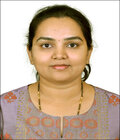
Shwetha Hassan Rangaswamy, Ph.D., is an Assistant Professor at the Department of Applied Mechanics and Hydraulics, National Institute of Technology, Surathkal, India. She earned her Ph.D. from the Indian Institute of Science, specializing in Civil Engineering. With expertise in Optical and Microwave Remote Sensing, her research focuses on Water Hydrology, Agriculture, and Irrigation Management. She has conducted research at esteemed institutions like ISRO and has publications in reputed journals.
Nimish Gupta of Centre for Science and Environment, New Delhi
Potential of Remote Sensing and GIS in urban heat studies
Biography:

Dr. Nimish Gupta, Ph.D., is the Deputy Programme Manager in the Sustainable Habitat Programme at the Centre for Science and Environment, New Delhi. A dedicated academician, he excels in Geoinformatics, Deep Learning, and Big Data Analytics. His expertise extends to Urban Climate Science, Environmental Management, and Sustainable Development Technologies. With a focus on Land Surface Temperature Extraction, he contributes significantly to Landscape Modeling, Geo-visualization, and Digital Image Processing research.
Shyam Lal of NITK, Surathkal
Deep learning model for agriculture crop classification
Biography:
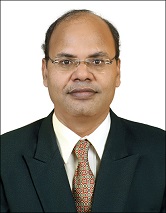
Shyam Lal is an accomplished academic holding the position of Associate Professor and Professor In-Charge (Housing & Hospitality) at NITK Surathkal since December 2013. With over 20 years of professional experience, including international stints in Italy and Japan, he specializes in Image Processing, particularly in Neural Networks and Deep Learning applications. His research spans various domains such as Medical Image Processing, Satellite Data Analysis, and Cyber Security. Noteworthy projects include developing automated systems for liver cancer detection and object extraction from remote sensing images, funded by esteemed agencies like SERB-DST and MeitY, Government of India.
T. V. Ramachandra of IISc,Banglore
Insights of Big data (spatial data), AI and ML for Prudent Management of Environment
Biography:
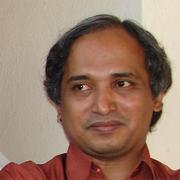
T.V. Ramachandra is a distinguished researcher affiliated with the Centre for Ecological Sciences at the Indian Institute of Science (IISc). His expertise spans diverse fields including Energy, Wetlands, Soil and Water Pollution, GIS, Remote Sensing, and Environment Education. With specialization in Renewable Energy and Integrated Energy Planning, he focuses on conservation of ecosystems, ecological modeling, bioremediation, and solid waste management. Proficient in GIS, remote sensing, and digital image processing, he contributes significantly to Environment Impact Assessment and Urban Sprawl analysis, advocating for sustainable development practices.
Dr. Vinod Kumar Sharma of ISRO
Machine Learning for Flood Mapping from Satellite Images
Biography:

Vinod Kumar Sharma is a scientist SF in Regional Remote Sensing Centre of National Remote Sensing Centre (ISRO), India. He received his Ph.D. in Geo-Engineering from Andhra University and Master's degree in Information Systems from Netaji Subhas Institute of Technology, Delhi University, India. His field of expertise includes Web-based Geoinformatics, Spatial DBMS, DSS/SDSS, Open-source GIS, Mobile application development, automation, spatial analysis, and processing on web. He significantly contributed in automating flood mapping activities using open source technologies and developed web portal for hosting National Database for Emergency Management. He developed spatial analytics tools for analysing house hold survey data and web based tools for gram panchayat spatial development plans. He developed software tools for automatic feature extraction using ML/DL techniques and high resolution satellite datasets.
Bharath H. Aithal of RCGSIDM IIT, Kharagpur
Application of Remote Sensing Technologies using Machine Learning in Urban Science Application
Biography:

Dr. Bharath heads Energy and Urban Research Group (EURG). He is currently Assistant professor in Ranbir and Chitra Gupta School of Infrastructure Design and Management at Indian Institute of Technology Kharagpur. He obtained his Ph.D. from Indian Institute of Science. His area of interest is spatial pattern analysis, Urban growth modelling, natural disasters, geoinformatics, landscape modelling, urban planning, open source GIS, digital image processing. He has published over 50 research papers in reputed peer reviewed international and national journals, 60 papers in the international and national symposiums as well as 1 book and 6 book chapters to his credit.
Indu J of IIT, Bombay
Biography:
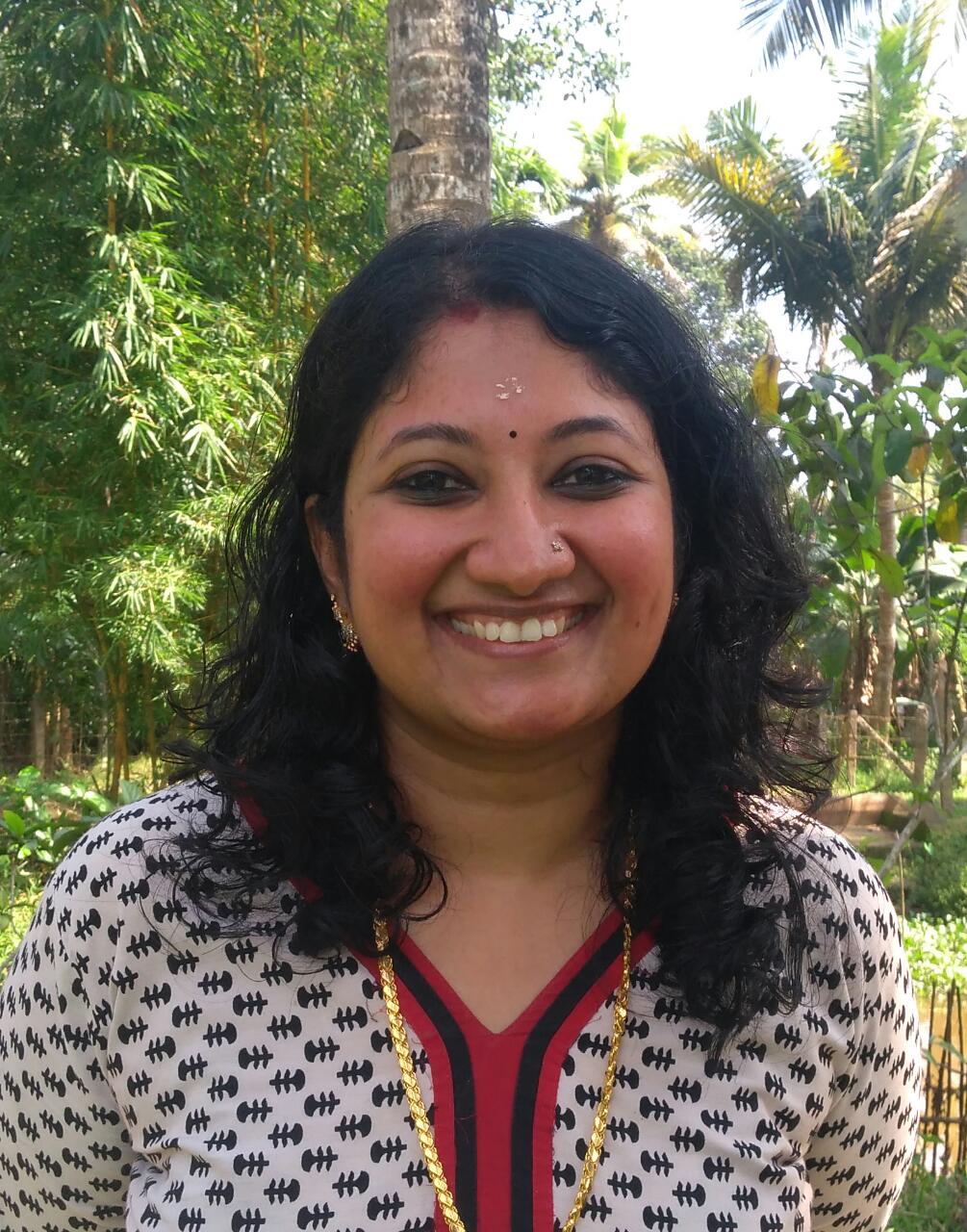
Prof. Indu J is an Associate Professor of Remote Sensing at the Indian Institute of Technology Bombay. With a focus on Microwave Remote Sensing, her research delves into Radar-Based Rainfall Uncertainty, Precipitation Nowcasting, and Water Resources Engineering. Proficient in Synthetic Aperture Radar (SAR) image processing and Fuzzy Logic, she contributes significantly to the advancement of Remote Sensing applications in Hydrology and related fields.
Agenda
The goal of the Summer School on Remote Sensing is to use mechanical devices known as remote sensors to collect data about objects remotely. These sensors don't require physical contact to rapidly and precisely gather data thanks to cutting-edge technology. Geographers use remote sensing to track and quantify phenomena in Earth's lithosphere, biosphere, hydrosphere, and atmosphere. Applications for remote sensing imagery are numerous and include mapping land-use, forestry, agriculture, city planning, archeology, and military observation, among other fields. To address the problems of large data in remote sensing photos, advanced AI and ML techniques are used, especially for effective classification. Even for individuals with little prior experience in the subject, the proposed online summer school intends to educate participants the application in remote sensing data analysis.
Five Days Online Summer School,08-12, August, 2023
Media
| NEW HORIZONS IN REMOTE SENSING: BASICS AND BEYOND | Five Days Online Summer School | 1.79 MiB |