

Post-Quantum Cryptography (PQC) Panel Webinar


Post-Quantum Cryptography (PQC)
Panel Webinar
Speakers and Panelists:
 |
 |
 |
|
Prakash Ramachandran |
Eman Hammad |
T. S. L. Radhika |
 |
 |
Abstract:
The subject of Enterprise Risk Management (ERM) involving Digital Public Infrastructure (DPI), Private as well Virtual Infrastructure is addressed by a Cryptography Security Framework (CSF) recommended by US Federal National Institute of Standard and Testing (NIST). The various international standard bodies like ITU, ANSSI (French), ETSI (EU), IEEE, IETF are in the process of upgrading their best practices and Normative specifications to address through updates to the existing standards as well as new ones.
As Risk Origin & Threat Objects (RO/TO) increase with different Asset Categories with the advent of quantum computing, post-quantum cryptography (or quantum-resistant cryptography) has become a key defense to security with both enhanced Encryption & Decryption on Digital Public Infrastructure (DPI) and Data Centers/Clouds to safeguard against newer quantum-enabled threats. The defense is to use new or updated Key Encryption Management Kyber (ML-KEM) and Digital Signature Authorization Dilithium (ML-DSA) to safeguard against the use of quantum computing capabilities to compromise current Asymmetric Keys as well as Symmetric Keys. For digital signature applications, the new FIPS 205 "Stateless Hash-Based Digital Standard" was approved along with it. These form the suite of algorithms underpinning Post-Quantum Cryptography (PQC).
The expert panel on PQC will walk through the Classical as well as Quantum-Safe Information standardization as addressed by NIST, private sector industries, and the academia through open competitions leading up to Cybersecurity Suite for Algebraic Lattice (CRYSTAL). Topics on Quantum Safe digital protection using FIPS-203,204,205 standards, KEM & DSA updates for Modular Lattice ML standards published by NIST will also be discussed. Time permitting, the interplay between Artificial Intelligence & Machine Learning (AI/ML) and PQC may also be addressed.
Acknowledgement:
This panel webinar is co-hosted by the IEEE Future Networks Technical Community (FNTC) International Network Generations Roadmap (INGR) QIT Working Group, Security and Privacy Working Group, AI/ML Working Group, the eMerging Open Tech Foundation which focuses on Quantum and AI skills development, the IEEE Philadelphia Section, and the IEEE Computer Society Philadelphia Chapter.
Speakers and panelists' biographies below.
Date and Time
Location
Hosts
Registration
-
 Add Event to Calendar


Loading virtual attendance info...
- Contact Event Hosts
-
Craig Polk [c.polk@comsoc.org]
- Co-sponsored by eMerging Open Tech Foundation
- Starts 26 August 2025 09:00 PM UTC
- Ends 11 September 2025 03:55 PM UTC
- No Admission Charge
Speakers
Baw Chng of BAWMAN LLC
Biography:
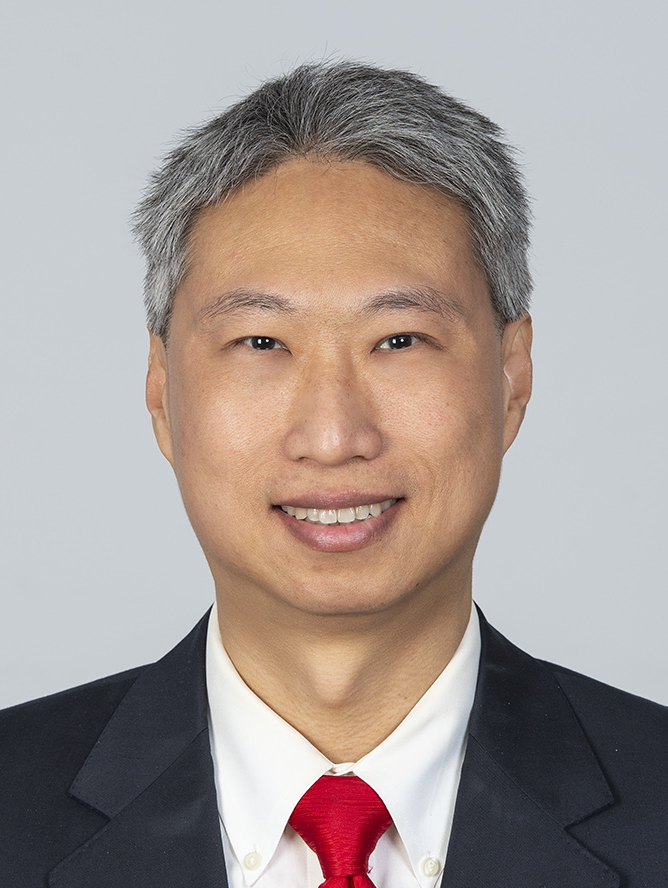
Baw Chng co-chairs the IEEE International Network Generations Roadmap (INGR) Artificial Intelligence and Machine Learning (AI/ML) Working Group. He served as Editor for the AI/ML chapter of the INGR (2024, 2023, & 2022 editions). He is a co-author of the Security & Privacy chapter, where he authored Sections 6.12.1 to 6.12.5 on “Cryptography and Post-Quantum Security” into the Chapter in 2023. He is also a co-author of the Standardization Building Blocks (SBB) chapter and the System Optimization chapter of the INGR. He has been awarded multiple patents in network and system architecture, security & authentication, mobility, and related fields. He consults in the networking and telecom industry through his consulting practice at BAWMAN LLC. He has extensive experience working with and consulting for large national communication service providers and their strategic technology vendors on strategy development, engineering R&D, and Standards engagements. He also consults for the legal community as an Expert Witness.
Email:
Prakash Ramachandran of eMerging Open Tech Foundation
Biography:
Prakash Ramachandran is a member of International Network Generation Road-map (INGR) leading Quantum Information Technology(QIT)/Edge Service Platform (ESP/EAP) working group as Co-chair since 2020. A serial entrepreneur with several startups in ICT in Silicon Valley, with offshore in Mumbai India and now investing his time in emerging technologies skill set development and mentoring various groups in areas of AIML, Quantum and Semiconductor technology. Has wide experience working in Silicon Valley for Dell, Huawei, AT&T, Intelligent Systems, WinVision, Tandem computers, IDM (India), Micronic Devices(India) besides consulting for various leading Networking (Cisco, Huawei), Software (MS, Oracle, SUN, Ubuntu), Hardware (Intel, NVidia) and Data Centers (Google, Rackspace). Was Independent Board of Director for Openstack 2018-2020 and part of various Open Source initiatives under Linux Foundation (LFEdge). Was vice chair Silicon Valley chapter of IEEE 2017-2019. His academic and R&D work includes university days with CMU, IITB,AU, Mumbai University, RCDU and MSU. A frequent speaker at global on-site and on events at Silicon Valley, Berlin. Paris, Delhi, Mumbai, Shanghai etc.
Email:
T. S. L. Radhika of BITS Pilani
Biography:
Dr. T. S. L. Radhika is an Associate Professor of Mathematics at BITS Pilani, Hyderabad Campus, with a PhD in Fluid Dynamics from NIT Warangal. With over 25 years of teaching and research experience, she works in applied mathematics, optimization, numerical methods, and quantum computing. She has completed a specialized program in Quantum Computing and Machine Learning at IIT Delhi, and currently guides research on classical and quantum machine learning with applications to secure computation and post-quantum cryptography. She is a member of the IEEE Quantum Technical Community and the IEEE Computer Society.
Eman Hammad of Texas A&M University
Biography:
Dr. Eman Hammad is a top Cybersecurity Professional and an Assistant Professor, Engineering Technology & Industrial Distribution, Electronic Systems Engineering Technology. She is Affiliated Faculty, Electrical & Computer Engineering, besides Multidisciplinary Engineering. She is Director: iSTAR Lab, innovations in Systems’ Trust and Resilience. She has led the Future Networks INGR since 2018 and represented INGR at FN World Forum and has received several awards for her dedication and innovations in the field of Cybersecurity. Her research interests include Cyber-Physical Systems’ Security, Trust, and Resilience & Autonomous, Collaborative, Human-in-the-Loop Complex Systems, Smart Grid and Next Generation Power Systems Operation, Security & Resilience, Critical Infrastructure Systems & Public Safety Networks.
Jiafeng (Harvest) Xie of Villanova University
Biography:
Dr. Jiafeng (Harvest) Xie received his Ph.D. degree from the University of Pittsburgh in 2014. He is currently an Associate Professor in the Department of Electrical & Computer Engineering at Villanova University. His research interests include cryptographic hardware for post-quantum cryptography, fully homomorphic encryption, fault detection, and digitalization for telemetry systems. Dr. Xie has served as TPC member for many reputed conferences. Currently, he is serving as Associate Editor for the IEEE Transactions on Signal Processing. He is also serving as Senior Associate Editor for the IEEE Transactions on Circuits and Systems-II: Express Briefs. He received the IEEE Access Outstanding Associate Editor 2019, the Best Paper Award from the IEEE International Symposium on Hardware Oriented Security and Trust (HOST) 2019, the IEEE Philadelphia Section Merrill Buckley Jr. Student Project Award 2022, and the IEEE Philadelphia Section Engineer of the Year Award 2024.