

Engineers Week Seminar Series


Engineers Week Seminar Series 2026
ENGINEERS WEEK SEMINAR SERIES
Thursday, February 12, 2026
(Snow date Thursday, February 26, 2026)
Place: Holiday Inn Plainview - 215 Sunnyside Boulevard, Plainview, NY 11803
Date and Time
Location
Hosts
Registration
-
 Add Event to Calendar


- Holiday Inn Plainview NY 11803
- 215 Sunnyside Boulevard
- Plainview, New York
- United States 11803
- Contact Event Host
- Co-sponsored by EJCLI (Engineers Joint Committee of Long Island)
Speakers
Ian Motley of U.S. Navy Reserve
Commercial High-Temperature Heat Pumps
This Professional Development Hour (PDH) seminar, Commercial High-Temperature Heat Pumps, begins with an in-depth understanding of the principles of heat pumps that are universal. The information proceeds into the latest developments and applications of high-temperature heat pump technology in commercial high-temperature settings. The session begins by exploring the mechanics of heat pumps, refrigerant properties, and classification systems, followed by a detailed discussion on system design considerations and performance metrics such as Coefficient of Performance (COP). Participants will gain insight into the latest global advancements and emerging trends in high-temperature heat pump technology, and what differentiates commercial and industrial heat pump applications from others. Equipping them with the knowledge to implement efficient, sustainable solutions in modern commercial systems.
Biography:
 Ian Motley is an accomplished engineer and U.S. Navy Reserve Lieutenant with a career spanning marine engineering, power generation, and advanced building electrification. A graduate of the United States Merchant Marine Academy (Class of 2015), Ian began his career at sea, rising to the rank of Chief Engineer before transitioning to shore-based roles as a Port Engineer and Shipyard Manager. His work has taken him across the globe—San Diego, Singapore, Japan, and the Philippines—where he managed complex projects involving propulsion systems, industrial plants, and large-scale energy infrastructure. Ian also brings experience from major energy facilities, including Northport Power Plant and Indian Point Energy Center in New York. Today, he serves as Program Manager for Miller Proctor Nickolas Inc., leading the Empire Technology Prize initiative and driving the development of high-temperature heat pump solutions to decarbonize New York City’s building stock. With a unique blend of operational expertise, technical design knowledge, and leadership in energy transition projects, Ian is passionate about advancing sustainable technologies while continuing his service as an active Navy Reservist.
Peter Krumdieck of Building Performance Labs
Multi-family Residential Heating Systems
This will be a review for some, but we’ll discuss the main types of heating systems in Multifamily Residential buildings. Topics will include Types of Boilers, Burners, and Distribution Systems. This class will introduce non-building engineers to the types of equipment that make up modern building heating systems.
Biography:
 Pete Krumdieck is a NYS Licensed Professional Engineer and an AEE Certified Energy Manager. He has both his bachelor’s in Electrical Engineering and master’s in Energy Management from NYIT. He has previously worked as Energy Manager for Stony Brook University. He has also worked with energy efficiency programs such as Con Edison’s Commercial & Industrial Incentive Program as Acting Engineering Manager with Lockheed Martin. He currently works for Building Performance Lab’s full time doing curriculum development and course instruction.
Gus Spathis of Xogito
Artificial Intelligence, an update
In today’s rapidly evolving digital world, Large Language Models (LLMs) have become instrumental in reshaping diverse sectors, ranging from customer service to content creation, and from language translation to code generation. Their pervasive influence calls for a comprehensive understanding of how they work, what distinguishes one type from another, and where the technology headed. This presentation will embark on a deep dive into both open-source and closed-source LLMs, aiming to provide engineers with a holistic understanding of these powerful tools.
Biography:
 An Internet pioneer with over twenty years' experience in technology, business, and marketing, Gus Spathis has created award-winning solutions for some of the most well-known companies today. He launched Xogito in 2008 to develop hi-tech software products in the fintech and consumer industries. Prior to launching Xogito, Gus founded CE Interactive, the largest structured catalog of consumer electronic products and a system that could intelligently reason about their operation. At Partsearch Technologies he harnessed machine learning, developing a system adept at categorizing a vast 100Mproduct catalog. Before Partsearch, he was CTO of E-Commerce Solutions, an innovator in digital advertising, pioneering context-driven product ads. In the early '90's, at Poppe-Tyson Interactive, he drove pivotal internet projects for clients like Citibank, Priceline, and Johnson & Johnson. Notably, he was the lead architect and managed the tech operations for the widely-watched IBM Deep Blue vs. Kasparov chess match broadcast.
Steve Slavutsky of Draeger Corp.
Toxic & Combustible Gas Detection Practices in Water & Wastewater Industries
This presentation starts off by explaining the difference between leak detection and gas analysis, then proceeds with an overview /discussion of the importance of toxic & combustible gas detection in water & wastewater treatment systems. The various technologies – electrochemical, catalytic bead and infrared sensors – are explained and how they work, as well as how these devices are integrated into a complete Leak Detection “System.” The presentation then teaches the practitioner how to select sensors based on physical location to be monitored, plus how to select Gas Leak Alarm Set Points. On-line resources on standards & regulations (CDC, NIST, etc.) are also mentioned.
Biography:
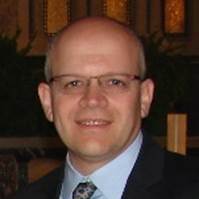 Steve Slavutsky has experience in both the industrial process controls and telecommunications industries dating back to 1993, the year he graduated from Temple University in Philadelphia, PA with a Bachelor of Science Degree in Electrical Engineering. Through the years that followed, he has held positions as an Applications Engineer, Hardware Design Engineer, Territory Manager, and – most recently – Regional Sales Manager. Steve has worked with industrial gas leak detection products and systems for the last 13 years and has enjoyed his current position of Regional Sales Manager for Draeger Fire and Gas Detection Systems for the last 9 years. The breadth of his experience in industry has enabled him to engage in all aspects of bringing industrial process control, monitoring, and data management products to market. With a background focused on overseeing the full life cycle of a wide variety of products – from concept to design through to manufacturing and eventual deployment in end-user installations, Steve’s knowledge of industrial gas leak detection is steeped in both the theoretical and practical, and is something he is very much looking forward to sharing with others.
Yongjian Gu of United States Merchant Marine Academy
Commercial Building Heating Systems
This presentation will discuss the heating, ventilation and air conditioning of Commercial Buildings. The presentation will compare several key aspects: central AC vs. Standalone units; Chilled water vs. Refrigerant systems; Water-cooling vs. Air-cooling methods; Steam heating vs. Water heating. Finally, we will cover the configuration of a complete Commercial HVAC system, introducing duct and piping systems, as well as the associated equipment & components.
Biography:
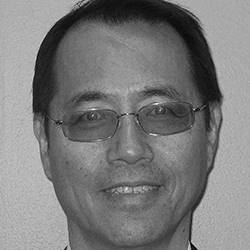 Dr. Yongjian Gu is an associate professor at the United States Merchant Marine Academy (USMMA) and an adjunct associate professor at New York Institute of Technology (NYIT). He teaches thermal-fluids, total energy systems & design, propulsions, steam turbine & marine components, gas turbine & auxiliary equipment, engineering economics, and other courses to undergraduates and graduate students. Dr. Gu holds a license of registered Professional Engineer (P.E.) in the State of New York. He also holds a certificate of professional Oracle Database Administrator (DBA). Prior to teaching at the academic institutions, Dr. Gu had worked at industrial corporations, consulting firms, and the U.S. Department of Energy’s (DOE) national laboratory as a senior mechanical engineer, project engineer, and lead engineer for many years. Dr. Gu has rich and valuable academic and professional experiences in HVAC system, piping systems, thermal energy systems, and renewable/sustainable energy applications. He is actively involved in engineering R&D and academic activities. Dr. Gu has many publications in his subject areas of teaching and professional expertise. He serves as peer-reviewers of multiple scientific and technical journals. He also sits on several professional committees and board members.
Arnie Stillman of POEM Technology
Exceptional Point Electronics
Exceptional point (EP) electronics represents a rapidly emerging branch of electrical circuit design using the unique properties of non-Hermitian systems to create responses unattainable in conventional circuits. At an exceptional point, the system exhibits highly nontrivial responses to perturbations, including sensitivity enhancement and asymmetric, robust energy transfer. These effects, originally explored in photonic and acoustic systems, are now being realized in purely electronic platforms, opening new opportunities for precision sensing and efficient power transfer. This talk explores the theoretical foundations, experimental implementations, and potential applications of exceptional point behavior in electronic systems.
Biography:
 Arnold Stillman is the founder and CEO of POEM Technology, a manufacturer of cellular IoT devices. He has held senior engineering positions at Clever Devices, Tactronics and Brookhaven National Laboratory. Most of his professional experience was at BNL, where he designed instrumentation for particle accelerators and high energy physics experiments. He is a past chair of the Long Island Section of the IEEE and is a member of the American Physical Society. He is the author of several publications and has been a reviewer for The Review of Scientific Instruments. He has a Physics degree from the University of Rochester.
Thomas Petracca of Petracca Design and Engineering, PC
Design of Sheet Pile Bulkheads
Structural engineering and design across the downstate region of New York including the Hudson River, Great South Bay, and Long Island Sound. Designs included all types of structures including cantilevered and tie-back utilizing cast concrete, steel sheet pile, plastic sheet pile, and fiberglass composite. : This seminar will identify the 3 considerations of primary importance in the design of bulkheads. It will include assumptions and wall data that used in the design. Typical bulkhead installations, and the materials used, will also be presented. Financial, permit, and legal considerations will be discussed. Design guides and references are included.
Biography:
 Thomas J. Petracca, P.E. is a highly consulted and well-respected Professional Engineer who is licensed in the states of New York, New Jersey, and Connecticut. He has maintained his reputation by treating every issue and project with honesty and integrity. Tom is a past President of the New York State Society of Professional Engineers. He is a member of the American Society of Civil Engineers; American Institute of Steel Construction; and American Illuminating Society. Petracca Design and Engineering, PC is a New York City Department of Buildings Special Inspection Agency.
Joseph Fragola of Asti, Inc
Risk in Design
Designers seldom, if ever, create designs “out of whole cloth”. They might begin with a clean piece of paper but their designs, no matter how creative or pioneering, must always embrace the technological heritage within which they are imbedded, at least to a degree. If they fail to do so they will almost certainly have great difficulty in being implemented, and even greater difficulty being successful. In this way the words “heritage” and “risk” have been linked, since time immemorial, in the design process and therefore in the designer’s mind’s eye. Recently, as an outgrowth of the broader application of probabilistic technology, a more formal and systematic link between design heritage and design risk has been attempted. The process risk informed design has now become standard at NASA and in other applications.
Biography:
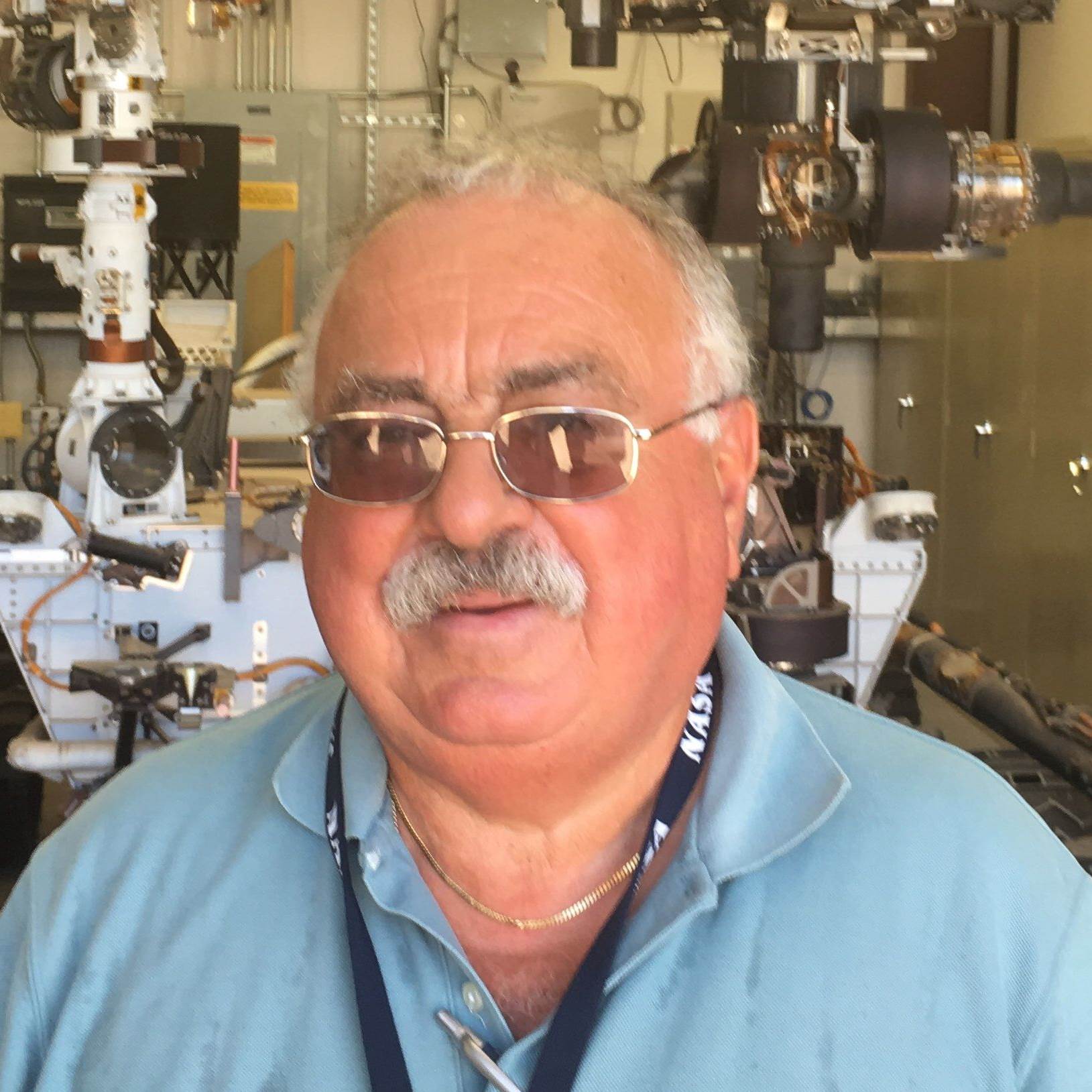 Dr. Fragola has over 50 years of experience in the aerospace, offshore oil, nuclear power and nuclear science industries. He has worked for Grumman on the Apollo program, at IEEE Headquarters, and as a Principal Scientist and Vice President at SAIC and Valador, Inc. He has an MS in Physics from Brooklyn Polytech and a DSc, HC, from the University of Strathclyde in Glasgow Scotland. He has established an international reputation in hardware, software and human reliability and risk analysis. He has been one of the pioneers of the concept of Risk Informed Design at NASA and elsewhere over the past decades. He has lectured widely in the US and overseas, including in China. Dr. Fragola was the Principal Investigator of the 1995 Space Shuttle Risk Assessment. He has presented over 100 papers and authored three books. He has received NASA and IEEE awards and best paper awards. He is a PE, Fellow of the IEEE and an AIAA Associate Fellow.
Steve Slavutsky of Draeger Corp.
Fire Protection Systems in Industrial Facilities
Discussion of different types of flame detectors and when to use one over another. How to interface with flame detectors and what actions should be taken when a flame is detected. Discuss the types of fires that may be present, visible vs. invisible and how to safely detect them. Discuss maintenance/testing of flame detection system. Talk through working with authority having jurisdiction (AHJ).
Biography:
Steve Slavutsky has experience in both the industrial process controls and telecommunications industries dating back to 1993, the year he graduated from Temple University in Philadelphia, PA with a Bachelor of Science Degree in Electrical Engineering. Through the years that followed, he has held positions as an Applications Engineer, Hardware Design Engineer, Territory Manager, and – most recently – Regional Sales Manager. Steve has worked with industrial gas leak detection products and systems for the last 13 years and has enjoyed his current position of Regional Sales Manager for Draeger Fire and Gas Detection Systems for the last 9 years. The breadth of his experience in industry has enabled him to engage in all aspects of bringing industrial process control, monitoring, and data management products to market. With a background focused on overseeing the full life cycle of a wide variety of products – from concept to design through to manufacturing and eventual deployment in end-user installations, Steve’s knowledge of industrial gas leak detection is steeped in both the theoretical and practical, and is something he is very much looking forward to sharing with others.
Kate Glode of Contech Engineered Solutions
New York Regulations & Stormwater Quality Practices
This presentation provides a general overview of today’s stormwater regulations withing NY and how to determine the best application for each post construction management practice. Review of: Design Considerations, Compliance with NYSDEC & Stormwater Regulations (including 2024 SW Manual Overview), Hydrodynamic Separators, Filtration Systems & Biofiltration Systems.
Biography:
 Kate Glode is the Stormwater Consultant for NY & CT, having been with Contech Engineered Solutions for over 13 years. Kate's background is in civil engineering; she graduated from Wentworth Institute of Technology in 2009 with a Bachelor's Degree in Civil Engineering. After working in the private sector at a civil/site design firm, she began her career with Contech where she attained her EIT as well as most recently, her PE in November of 2023. Kate specializes in stormwater/hydraulic design and is well versed in Stormwater Regulations across NY and CT - focusing on providing guidance and design support in ensuring engineers are able to meet the stormwater requirements utilizing manufactured stormwater systems.
David Paris of AIAA, Long Island Chair
Supersonic Aircraft
In 1947, the first aircraft to fly supersonically proved that the Sound Barrier could be broken. Over the next eight decades, numerous supersonic aircraft were designed, flown, and placed into the air force services of many nations. Only two supersonic commercial aircraft were placed into airline service. The Concorde was restricted to fly at subsonic speeds over populated land areas and that eventually led to its removal from service. New concepts changed that and led to the supersonic YF-102A, all of the other supersonic aircraft, and the hypersonic X-15. Research on reducing sonic booms has been underway for many years and may ultimately lead to a viable supersonic transport aircraft. This seminar will cover the history & technology concepts in development.
Biography:
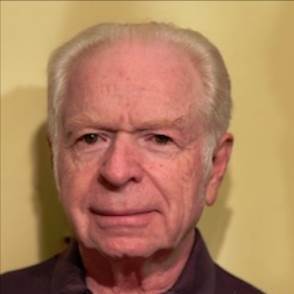 Dave grew up in Queens, graduated from Brooklyn Technical High School, and earned engineering degrees in Aeronautics and Astronautics from New York University. He is now retired after spending a career developing and applying computational fluid dynamics methods to turbomachinery components including nacelles, compressors, turbines, fans, combustors, and pumps. Dave worked at Republic Aviation, GASL, Pratt and Whitney Aircraft, Northern Research and Engineering, and Concepts NREC. He was a project engineer, managed software customer support, managed a group of design software developers, and retired as Director of Software Sales and Marketing. He returned to New York in 2003 after having been away for over 30 years. He has been a private pilot, Planning and Zoning Commission member, cub scout leader, soccer coach, Civil Air Patrol leader, and amateur actor. Dave has been a member of AIAA since 1975, served as chairman of both the Connecticut and New England Sections, and has been the chairman of the Long Island Section for almost 20 years. Since retiring, he has been lecturing at libraries, schools, and at sessions of the Personal Enrichment in Retirement group on Long Island.
Ted Rozier of FESTO USA
Unleashing the Power of Collaborative Robotics
In this session, we explore the evolution of manufacturing from the traditional dull, dirty, and dangerous era to today’s rapidly advancing digital landscape. Over the past two decades, breakthroughs in data management, AI, and Industry 4.0 methodologies have significantly transformed production environments. Nowhere is this transformation more visible than in robotics. As robots take on more responsibility, humans and machines must work more closely together. This shift highlights the growing importance not only of collaborative robots (cobots), but of collaborative automation as a whole. With the updated R1506 safety standards, the term “collaborative application” now defines what qualifies as a safe industrial robotic system—reshaping both expectations and design principles for future automation. Together, these trends set the stage for the next frontier: the rise of highly capable humanoid robots integrated into industrial workflows. Attendees will gain insight into where the industry has been, how collaborative technologies are reshaping modern manufacturing, and what the future holds as robotics becomes more intelligent, adaptable, and human-aware.
Biography:
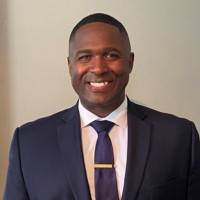 Ted Rozier is the Director Of Engineering for Festo Didactic Solution Center North America. Head quartered in Mason Ohio. Before Joining Festo Didactic, He Brings 20 years of experience in leading the Automation Engineering Department for Doosan Infracore Machine Tool Corporation. He specialized in the design and development of Robotics and Machine tool turnkey systems for the Automotive, Aerospace and Pharmaceutical industry. Ted has managed the development of several User friendly automation control turnkey systems on a global scale. As Director of Engineering of Festo Didactic, Ted is passionately looking to advance Festo Didactic as a global leader in designing and implementing Industry 4.0 learning factories and Career Pathways with the view to systematically prepare individuals to excel working in dynamic and complex industrial automation environments.