

Emerging AI/Machine Learning Technologies for Analysis and Optimization in High-Speed/High-Frequency Packages and Systems


An in-person presentation by IEEE EMC-S Distinguished Lecturer and IEEE Fellow Prof. Qi-jun Zhang from Carleton University, Canada
AI and machine learning are unconventional technologies with unique capability to address challenges in electromagnetic-based analysis and optimization in high-speed/high-frequency electronic components/packages and systems. With phenomenal progress in electromagnetic based computation algorithms, along with dramatic changes in the computing environment, high-fidelity electromagnetic models are now an important part of high-speed/high-frequency electromagnetic design automation. However new design challenges continue to rise. Electromagnetic structures and circuits are becoming more complex, and frequency is getting higher. More sophistication in multiphysics modeling and design are becoming increasingly necessary. Meaningful design problems easily become computationally prohibitive.
In this talk, we present AI/machine learning technologies for electromagnetic/multiphysics based modeling and optimization, and their applications to signal/power integrity analysis of highspeed/high-frequency electronic packages and subsystems. We will highlight emerging directions of knowledge-based, cognition-driven design. Incorporating domain-specific design knowledge/engineering equations into artificial neural networks, knowledge-based and deep-learning based computational technologies are producing fine-grained modeling and design solutions for problems which are otherwise computationally very expensive. New formulations of inverse neural network training algorithms allow instant solutions to electromagnetic inverse modeling problems addressing the technical challenges of non-uniqueness in inverse modeling. Emerging machine learning structures and optimization algorithms for electromagnetic based design and signal/power integrity analysis will be discussed.
This talk is open to everyone, IEEE membership is not required.
Please join us at 5:30PM for networking and light refreshments!
Date and Time
Location
Hosts
Registration
-
 Add Event to Calendar


- Center for Science and Technology at Syracuse University
- 111 College Pl
- Syracuse, New York
- United States 13210
- Building: Parking: Street, or paid parking in one of SU's parking lots.
- Room Number: CST 4-201
- Click here for Map
- Contact Event Host
- Co-sponsored by Syracuse University EECS Department
- Starts 18 September 2026 04:00 AM UTC
- Ends 30 September 2026 09:00 PM UTC
- No Admission Charge
Speakers
IEEE EMC-S Distinguished Lecturer and IEEE Fellow Prof. Qi-jun Zhang of Carleton University, Canada
Biography:
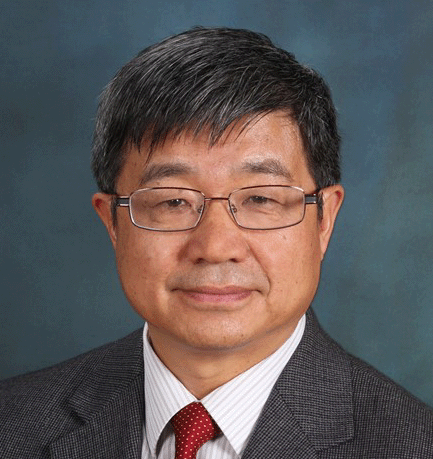 |
Dr. Zhang received the B.Eng. degree in EE from Nanjing University of Science and Technology (Nanjing) in 1982, and the Ph,D. degree in EE from McMaster University (Hamilton, Ontario) in 1987. He was a researcher engineer in Optimization Systems Associates Inc. (Dundas, Ontario) during 1988-1990 developing advanced microwave optimization software. He joined the Department of Electronics, Carleton University in 1990, where he is currently a Chancellor’s Professor. Dr. Zhang’s research area is AI/machine learning, and optimization for designing high-speed/high-frequency components/packages and systems, which are building blocks of computers, wireless and wired systems in telecommunications, internet, and intelligent and autonomous systems. Dr. Zhang advanced the theory and practice of microwave active and passive computer-aided design with innovations in linear and nonlinear device modeling and circuit optimization for which he received the IEEE Fellowship in 2006. Dr. Zhang is one of the pioneers of neural networks and machine learning for microwaves which started in the early 1990s. Dr. Zhang’s continuous innovations in this area for over 30 years have established many research milestones, and contributed to the substantial development of the area. He authored (with Prof. K.C. Gupta) the first book of the area (Neural Networks for RF and Microwave Design, Boston, Artech House, 2000), and developed the first software (NeuroModeler, 1998) of the area. His neural network based modeling technology was adopted in industrial projects such as the Advanced Embedded Passives Technology Consortium (2000-2003) funded by the US Department of Commerce and the National Center for Manufacturing Sciences (Michigan, USA). In 2012, neural network based transistor modeling technology pioneered by him and his student became a primary feature of Agilent/Keysight IC-CAP software, the microwave industry’s dominant modeling tool. Over 360 technical papers archive his pioneering contributions. Example of publication: Q.J. Zhang, K.C. Gupta and V.K. Devabhaktuni, “Artificial neural networks for RF and microwave design: from theory to practice,” IEEE Trans. Microwave Theory Techniques, vol. 51, 2003, pp. 1339-1350. Dr. Zhang’s paper with his former PhD students F. Feng, W.C. Na, J. Jin, J.N. Zhang, W. Zhang, titled “Artificial neural networks for microwave computer-aided design: the state of the art,” IEEE Transactions on Microwave Theory and Techniques, vol. 70, no. 11, pp. 4597-4619, Nov. 2022 became hugely influential. The paper is ranked the #1 most frequently accessed paper in a given month among all papers of IEEE Transactions on Microwave Theory and Techniques, for each and every month for 11 months in a row since its publication in November 2022. At the time of writing this paragraph, the latest monthly statistics (October 2024) shows that this paper is currently still the #1 most frequently accessed paper of the IEEE Transactions on Microwave Theory and Techniques. |
Agenda
5:30pm: Networking and light refreshments;
6:00pm: Presentation;
7:00pm: Q&A and discussion;
Please note - This is an in-person event and registration is limited due to the constraints of the venue. If you register and find that you cannot attend, please cancel your registration so others will be able to attend. Questions? Send email with subject line "IEEE Prof. Qi-jun Zhang event" to menders@ieee.org