

MTT-S Distinguished Microwave Lecture: Sensing, Tracking, and Secured Communication with Artificial Electromagnetic Materials


The IEEE MTT-S Student Branch Chapter, University of Wisconsin–La Crosse jointly with the IEEE Denver Joint AP-S / MTT-S Chapter and the IEEE SEM Chapter IV Trident Chapter are pleased to host a virtual seminar by MTT Distinguished Microwave Lecturer Prof. Chung-Tse Michael Wu from National Taiwan University. Prof. Chung-Tse Michael Wu will give a seminar titled, "Sensing, Tracking, and Secured Communication with Artificial Electromagnetic Materials" at 10:00 am ET on Tuesday, October 20, 2026.
Live on Zoom · Free and open to all — no registration required
Join: https://wisconsin-edu.zoom.us/j/96409174016?pwd=lBae0Tsar2KbVRx6NEInaNjkfwh8Co.1
One-click join — passcode embedded in the link · Meeting ID: 964 0917 4016
SEM Trident Chapter (AP03/ED15/MTT17/PHO36) website
Date and Time
Location
Hosts
Registration
-
 Add Event to Calendar


Loading virtual attendance info...
- Starts 14 October 2026 04:00 AM UTC
- Ends 20 October 2026 04:00 PM UTC
- No Admission Charge
Speakers
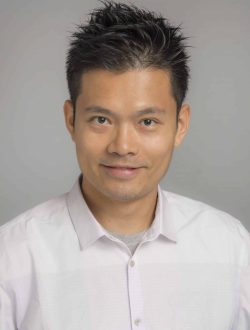
Prof. Chung-Tse Michael Wu of National Taiwan University
Sensing, Tracking, and Secured Communication with Artificial Electromagnetic Materials
Metamaterials (MTMs) are synthetic electromagnetic materials possessing unique properties not found in natural
materials, and their introduction has spurred the creation of innovative circuits with enhanced components. One
notable metamaterial-based design is the composite right/left-handed transmission line (CRLH-TL) leaky-wave
antenna (LWA). These antennas offer continuous frequency-dependent beam scanning from backfire to endfire
with a true broadside beam, while ensuring excellent impedance matching throughout their operational range using
a straightforward feeding mechanism. The CRLH LWA’s ability to map frequency to space means unknown target
locations can be pinpointed simply by analyzing the spectral components of the returning wave. This paves the way
for real-time detection, with data acquisition speeds mainly determined by the signal source’s frequency sweep rate,
and an expanded field-of-view thanks to the wide scanning angle of CRLH LWAs. Such features enable
applications like swift 2-D beamforming, expansive real-time remote sensing, vital sign monitoring, motion
detection, and microwave imaging. Additionally, applying spatiotemporal modulation to CRLH LWAs can generate
harmonic waves and enhance physical-layer security, promoting safer wireless communication.
Biography:
Chung-Tse Michael Wu is a Professor of Electrical Engineering at National Taiwan University, which he joined after
faculty appointments at Rutgers University and Wayne State University. He received his B.S. from National Taiwan
University and his M.S. and Ph.D. in Electrical Engineering from UCLA. His research spans applied
electromagnetics, antennas, passive and active microwave and millimeter-wave components, MMICs, RF systems,
and metamaterials. His honors include the IEEE MTT-S Outstanding Young Engineer Award (2024), the DARPA
Director’s Fellowship (2021), the DARPA Young Faculty Award (2019), and the NSF CAREER Award (2016). He
serves as an IEEE MTT-S Distinguished Microwave Lecturer (2025–2027), chairs the MTT-S Technical Committee
on Biological Effects and Medical Applications (TC-28), and is an Associate Editor of IEEE Microwave and Wireless
Technology Letters.
Address:Taiwan
Agenda
Tuesday, October 20, 2026
10:00 a.m. Eastern - 9:00 a.m. Central - 8:00 a.m. Mountain·
IEEE MTT Distinguished Microwave Lecture
Sensing, Tracking, and Secured Communication with Artificial Electromagnetic Materials
|
|
Prof. Chung-Tse Michael Wu, Ph.D. Professor of Electrical Engineering |
Abstract: Metamaterials (MTMs) are synthetic electromagnetic materials possessing unique properties not found in natural materials, and their introduction has spurred the creation of innovative circuits with enhanced components. One notable metamaterial-based design is the composite right/left-handed transmission line (CRLH-TL) leaky-wave antenna (LWA). These antennas offer continuous frequency-dependent beam scanning from backfire to endfire with a true broadside beam, while ensuring excellent impedance matching throughout their operational range using a straightforward feeding mechanism. The CRLH LWA’s ability to map frequency to space means unknown target locations can be pinpointed simply by analyzing the spectral components of the returning wave. This paves the way for real-time detection, with data acquisition speeds mainly determined by the signal source’s frequency sweep rate, and an expanded field-of-view thanks to the wide scanning angle of CRLH LWAs. Such features enable applications like swift 2-D beamforming, expansive real-time remote sensing, vital sign monitoring, motion detection, and microwave imaging. Additionally, applying spatiotemporal modulation to CRLH LWAs can generate harmonic waves and enhance physical-layer security, promoting safer wireless communication.
Bio: Chung-Tse Michael Wu is a Professor of Electrical Engineering at National Taiwan University, which he joined after faculty appointments at Rutgers University and Wayne State University. He received his B.S. from National Taiwan University and his M.S. and Ph.D. in Electrical Engineering from UCLA. His research spans applied electromagnetics, antennas, passive and active microwave and millimeter-wave components, MMICs, RF systems, and metamaterials. His honors include the IEEE MTT-S Outstanding Young Engineer Award (2024), the DARPA Director’s Fellowship (2021), the DARPA Young Faculty Award (2019), and the NSF CAREER Award (2016). He serves as an IEEE MTT-S Distinguished Microwave Lecturer (2025–2027), chairs the MTT-S Technical Committee on Biological Effects and Medical Applications (TC-28), and is an Associate Editor of IEEE Microwave and Wireless Technology Letters.