

Big Health Data with Wearables: Sensing, Processing and Outcomes


This will be an update of the December 3, 2020 presentation to present the latest results on DETECT, and then overview the other digital platforms and AI solutions we have developed. This large study provides the baseline for DETECT, our app-based, nationwide clinical study enrolling individuals who routinely use a smartwatch or other wireless devices to determine if individualized tracking of changes in heart rate, activity and sleep can provide early diagnosis and self-monitoring for COVID-19. In this talk, we discuss how this program has been implemented and which insights for the individual and for public health are obtained by analyzing data from more than 36,000 individuals. We show our recent results on the validation of this algorithm, proving that it can identify COVID-19 positive cases by analyzing both self-reported symptoms and wearable sensor data.
This large study provides the baseline for DETECT, our app-based, nationwide clinical study enrolling individuals who routinely use a smartwatch or other wireless devices to determine if individualized tracking of changes in heart rate, activity and sleep can provide early diagnosis and self-monitoring for COVID-19. In this talk, we discuss how this program has been implemented and which insights for the individual and for public health are obtained by analyzing data from more than 36,000 individuals. We show our recent results on the validation of this algorithm, proving that it can identify COVID-19 positive cases by analyzing both self-reported symptoms and wearable sensor data.
Date and Time
Location
Hosts
Registration
-
 Add Event to Calendar


Loading virtual attendance info...
- Starts 08 October 2022 12:00 AM UTC
- Ends 24 October 2022 07:00 PM UTC
- No Admission Charge
Speakers
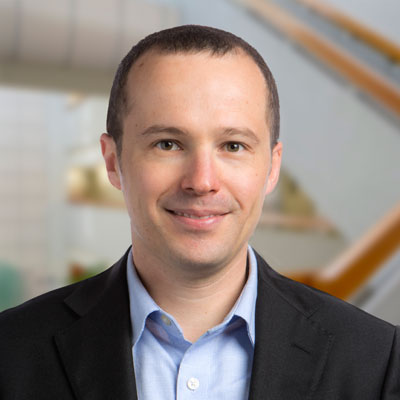 Dr Giorgio Quer - COMSOC Distinguished Lecturer of Director of Artificial Intelligence, Scripps Research Translational Institute, La Jolla, CA
Biography:
Dr. Giorgio Quer received a Ph.D. degree (2011) in Information Engineering from University of Padova, Italy. In 2007, he was a visiting researcher at the Centre for Wireless Communication at the University of Oulu, Finland. During his Ph.D., he proposed a solution for the distributed compression of wireless sensor networks signals, based on the joint exploitation of Compressive Sensing and Principal Component Analysis. From 2010 to 2017, he was a visiting scholar at the California Institute for Telecommunications and Information Technology and then a postdoc at the Qualcomm Institute, University of California San Diego (UCSD), working on cognitive networks protocols and implementation. At Scripps Research, he is leading the Data Science and Analytics Scripps team involved in the All of Us Research Program (NIH), together with several efforts involving big data and AI in digital medicine, including DETECT, towards the use of wearables to detect COVID-19. He is a Senior Member of the IEEE and a Distinguished Lecturer for the IEEE Communications society. His research interests include wireless sensor networks, compressive sensing, probabilistic models, deep convolutional networks, wearable sensors, physiological signal processing, and digital medicine.