

IEEE Young Professionals Amplified Cleveland 2026 - Saturday Experience





IEEE Young Professionals Amplified Cleveland 2026 offers young professionals a unique opportunity to enhance their skills and grow their network through engaging presentations, panels, and relaxed social settings. This dynamic event provides a collaborative platform where young professionals come together to shape the future of technology and leadership. We will kick off the weekend with an exclusive networking happy hour at Collision Bend Brewing Company. This gathering provides the perfect opportunity to connect with fellow young professionals, industry leaders, speakers, and the event's volunteers.
Our main event, taking place on Saturday, July 11 at Cleveland State University, will feature a full day of programming centered on technical innovation and professional development. The morning will begin with a welcome and “What is IEEE” presentation by 2025 IEEE President Kathleen Kramer, followed by “The Pulse of Technology” by Mike Wise of IoT Sandbox. The first technical block will explore Internet of Things (IoT) and Emerging Technologies, featuring “IoT Basics” with Peter Sords and Ken Loparo and a fireside chat with Larry Sears, creator of the Sears think[box] at Case Western Reserve University, one of the nation’s premier university innovation and makerspaces. In parallel, attendees can participate in AI and Controls sessions covering AI for autonomous vehicles and Communication-Based Train Control (CBTC), as well as a Women in Engineering breakout session. The morning concludes with a cross-disciplinary technology panel highlighting IoT, AI, and high-tech opportunities in Cleveland region.
The second half of the day will focus on career growth and professional success. Attendees will hear a keynote presentation by NASA Research Engineer Dr. Rachel Dudukovich on the soft skills essential for long-term career success, participate in interactive career development sessions, connect with speakers and industry professionals during dedicated networking time, and gain valuable perspectives from a Young Professionals and Women in Engineering career panel featuring professionals at various stages of their careers.
Following our main event, we invite all attendees to join us for dinner at a Hofbräuhaus to continue the conversation, build meaningful professional connections, and unwind with fellow attendees in a relaxed and welcoming atmosphere. This networking dinner provides an excellent opportunity to connect with speakers, industry professionals, and peers while reflecting on the insights and experiences shared throughout the day. Whether you are preparing to enter the workforce, recently graduated, or navigating the first 15 years of your professional journey, IEEE Young Professionals Amplified Cleveland 2026 is the place to connect, learn, and grow.
Register for both events today!
Friday Happy Hour: https://events.vtools.ieee.org/m/555421
Saturday Experience: https://events.vtools.ieee.org/m/555484
Official Website: https://ieeecleveland.org/amplified
Friday Happy Hour at Collision Bend
This is a separate event. Please register at: https://events.vtools.ieee.org/m/555421
Saturday Experience
Cleveland State University Glasscock Ballroom
Address: SC 311, 2121 Euclid Avenue, Cleveland, OH 44115
Agenda: Please visit ieeecleveland.org/amplified.
Dinner: Saturday, July 11 - 6:00pm - Hofbräuhaus Cleveland
We will walk over to Hofbräuhaus from CSU. If attending, please indicate if you are interested by selecting it while registering.
IEEE Cleveland Section
Please visit ieeecleveland.org to learn more about the Cleveland Section!
IEEE Cleveland Section is a proud recipient of the Greater Cleveland Partnership Best of Tech 2025 Award!

Hotel Room Block at The Hotel Cleveland
Book your group rate for IEEE Room Block
Start Date: Friday, July 10, 2026
End Date: Monday, July 13, 2026
Hotel(s) offering your special group rate:
- Hotel Cleveland, Autograph Collection for 199.00 USD per night - Last Day to Book : Tuesday, June 30, 2026
Diamond Sponsors

Gold Sponsors

Sponsors

Media Partners

Date and Time
Location
Hosts
Registration
-
 Add Event to Calendar


- 2121 Euclid Avenue
- Cleveland, Ohio
- United States 44115
- Building: Glasscock Ballroom
- Starts 18 April 2026 04:00 AM UTC
- Ends 23 June 2026 03:30 AM UTC
- Admission fee ?
Speakers
Peter Sords
IoT Sandbox Breakout: IoT Basics with Peter Sords and Ken Loparo

Biography:
Peter Sords is the founder of Kyros Engineering, a Cleveland product-development firm building embedded firmware, electronics, and connected hardware across consumer, industrial, energy, and medical products. A B.S. Biomedical Engineer (Lehigh) and M.S. Electrical Engineer (Case Western), his work runs deep in system architecture, control systems and smart feedback, power electronics, and robotics — spanning autonomous warehouse robots, Factory 4.0 production systems, EV chargers, connected appliances, and edge-AI medical devices. That breadth is what lets him assemble the right curated team of proven specialists for each project — taking connected products from architecture through verified hardware.
Email:
Larry Sears
IoT Sandbox Breakout: Fireside Chat with Cleveland Legend, Larry Sears, the Inventor of IoT

Biography:
From case.edu:
When students enter the Larry Sears and Sally Zlotnick Sears think[box], they might find one of its namesakes at a workbench, soldering or swapping ideas with fellow makers.
“You learn by watching what other people are doing,” said Larry Sears (CIT ’69), who holds or co-holds nearly 20 patents. “I still do.”
A longtime Case Western Reserve University trustee and former adjunct professor of electrical engineering, Sears is a steady presence in the innovation center he helped bring to life.
Last year, for example, he helped start CWRU’s thinkSTEM, a summer day camp for middle-schoolers, introducing them to engineering. And last spring, he competed alongside students in the inaugural think[box] Derby with his own entry: a fan-powered car that started at the finish line and raced backward up the track.
“That’s what engineers do—figure out problems. And if they don’t have a problem to solve, they usually make one up themselves.”
—Larry Sears
His belief in hands-on learning goes back to his undergraduate days at Case Institute of Technology, when he held campus lab jobs working in electronics that provided foundational learning opportunities essential to his eventual success.
After graduation, Sears founded Hexagram Inc. and eventually developed wireless systems that allowed utilities to read gas, water and electric meters remotely—technology that helped usher in what is now known as smart metering.
“My real-world experience as an undergraduate was invaluable,” he said. “And I wanted to make sure that others had the same opportunity. Even if students were not fortunate enough to have the deep laboratory experiences that I had, I wanted to acquaint them with real-world design, engineering and manufacturing; engineers should understand how things are made.”
That belief became the foundation for Sears think[box].
After Hexagram’s sale in 2006, Larry Sears and his wife, Sally Zlotnick Sears (FSM ’72, LYS ’74), gave $6 million to create the Sears Undergraduate Design Lab. In 2012, they committed $5 million for think[box], then a small, new campus makerspace. They later gave another $5 million for the current space, a seven-story innovation center renamed in their honor.
In 2005, Larry Sears also began educating CWRU undergraduates, blending theory with practice as they designed, built and tested projects in “Applied Circuit Design,” which students often described as the “hardest and best” course they ever took.
In 2020, he earned a CWRU award for teaching excellence. “This sounds corny, but ‘Larry Lab’ changed my life,” one former student said at the time.
Thousands more—students, tinkerers and entrepreneurs—have been shaped by his teaching and the space he helped make possible.
Kartik Srinivasan
AI and Controls Breakout: AI for Autonomous Vehicles: From Foundation Models to Functional Safety with Kartik Srinivasan
Biography:
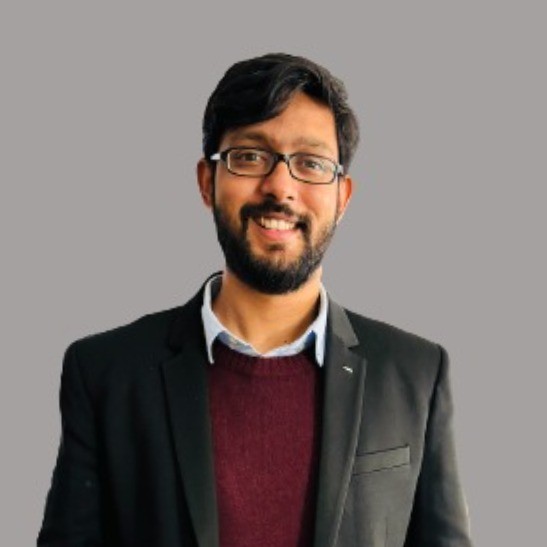
Kartik Srinivasan is a Staff Systems Engineer specializing in Hardware-in-the-Loop (HIL) Verification & Validation (V&V) for autonomous vehicles. With over a decade of experience in automotive and autonomous systems, he has played a pivotal role in developing HIL V&V strategies for Level 4 autonomous trucks at Torc Robotics. His expertise includes designing HIL test environments, system integration, and test automation for safety-critical vehicle systems. Previously, Kartik led HIL validation teams at Motional, contributing to the development of Drive-by-Wire and Perception subsystem testing frameworks. His work at Nexteer Automotive and LG Chemical Power further strengthened his experience in mechatronic test benches, functional safety, and battery management systems. Holding a Master’s degree in Electrical Engineering from Michigan Technological University, Kartik has pioneered innovative HIL testing methodologies. Passionate about AV safety and scalable validation frameworks, he actively contributes to advancing the field of autonomous mobility.
Colin Russell
Welcome to IEEE

Biography:
Colin Russell is a Computer Engineer from Youngstown, Ohio now based in Cleveland. He is the chair of the Young Professionals Affinity Group within the IEEE Cleveland Section. Additionally, he is the Vice Chair of Events for IEEE Regions 1 and 2 Young Professionals. Colin is a Senior Software Engineer at Nationwide where he specializes in creating APIs and microservices for the financial services industry. Colin is a graduate of Ohio University, where he was an ambassador for the Russ College of Engineering and Technology's Electrical Engineering program and chair of the university's student section of IEEE. While chair of the Ohio University IEEE branch, Colin organized presentations featuring guest speakers from prestigious organizations including NASA, Boeing, the Department of Energy, and Ohio University's own professors. In addition to leading the Ohio University IEEE section, Colin worked with the student ExCom to revitalize the university's Eta Kappa Nu section. To further his education, Colin is currently pursing a Master's of Science in Computer Science from Tufts University.
Rachel Dudukovich
Biography:
From https://ai-action.org/person/rachel-dudukovich/:
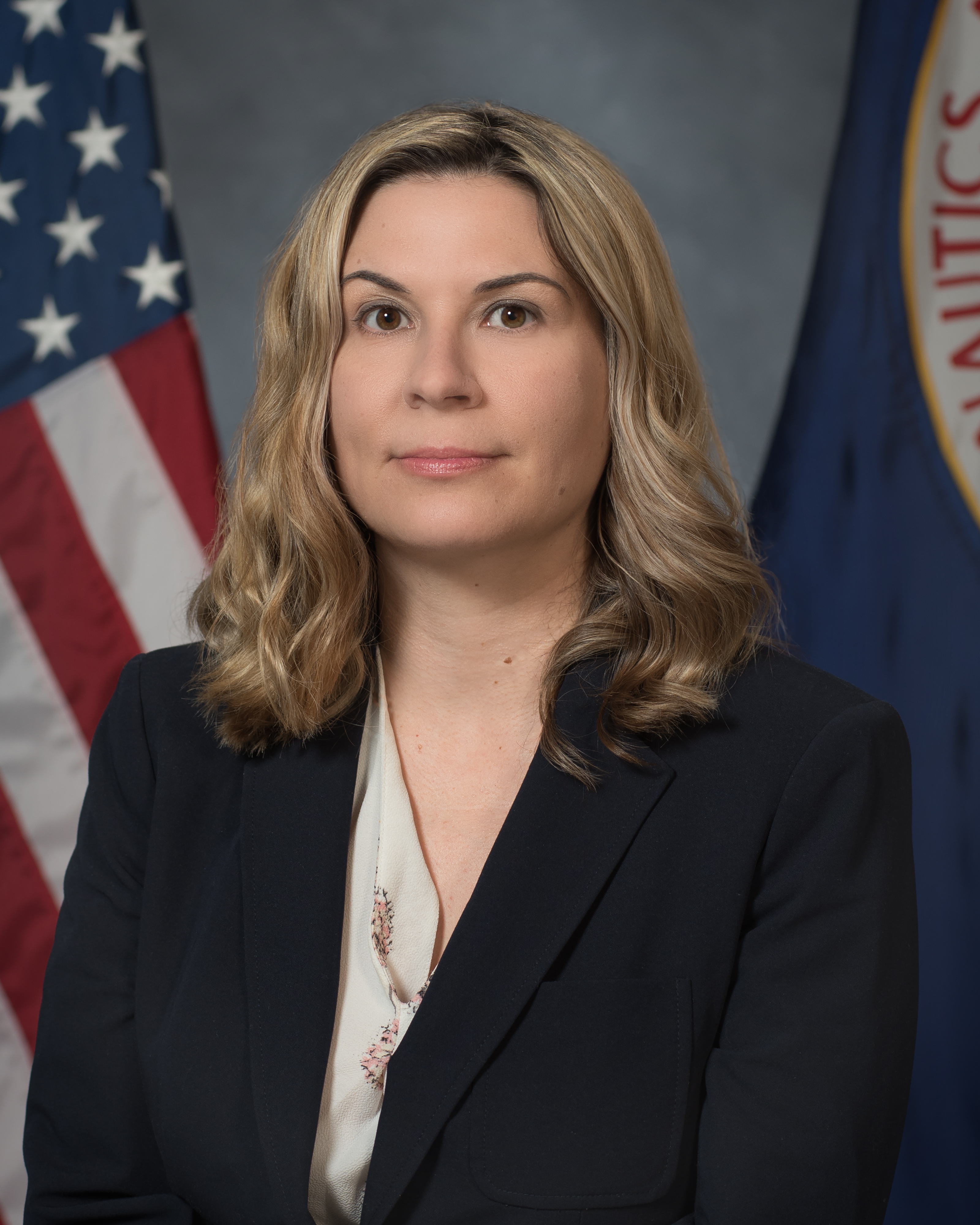
Dr. Rachel Dudukovich is the cognitive networking lead for the NASA Space Communication and Navigation (SCaN) Cognitive Communications Project. She received her Ph.D. in Computer Engineering from Case Western Reserve University in 2019. Her research and development efforts are focused on applying machine learning and artificial intelligence to networking technologies for space communications. She is interested in determining and developing the essential building blocks to enable cognitive communications in space, as well as infusing modern networking technologies into the NASA communication networks. She is also the software development lead for the High-rate Delay Tolerant Networking project. Her interests include network emulation, cloud computing, artificial intelligence, machine learning, delay tolerant networking, and open-source software collaborations.
Claire Harding
WIE Breakout: Claire Harding | NASA Glenn Research Center

Vaibhav Mishra
Bridging the gap between engineering education and industry requirements using ERP technology (SAP S4HANA)

Biography:
Driven by a mission to bridge the gap between engineering education and industry requirements, Vaibhav Mishra is a distinguished researcher and SAP S/4HANA ERP Consultant with over 20 years of global experience. His impactful academic work is balanced by a formidable corporate track record, having led complex ERP implementations across nine countries and three continents. Vaibhav’s versatile industry expertise spans utilities, medical equipment, automotive, refining, infrastructure, and building materials. An IEEE-published author, his cutting-edge research also covers AI-based predictive maintenance for plant machinery. He further contributes to the academic community by serving as a judge and reviewer for leading scientific events and research journals.
Email:
Address:Columbus, Ohio, United States
Agenda
|
Time |
Activity on July 11 |
Duration |
||
|
8:45a-9:45a |
Breakfast and registration |
60 m |
||
|
9:45a |
Welcome & What is IEEE with 2025 IEEE President Kathleen Kramer |
30 m |
||
|
10:15a-10:30a |
The Pulse of Technology by Mike Wise of IoT Sandbox |
15 m |
||
|
10:30a-10:45a |
Break |
15 m |
||
|
10:45a-12:00p |
IoT and Emerging Technologies 30 min – Fireside Chat with Cleveland Legend, Larry Sears, the Inventor of IoT 15 min - Q&A |
AI and Controls 30 min - AI for Autonomous Vehicles: From Foundation Models to Functional Safety with Kartik Srinivasan 30 min - Communication-Based Train Control (CBTC) Decoded - Advancing Rail Through Transparency and Technology with Alexander Impastato 15 min - Q&A |
WIE Breakout - Speakers: Claire Harding - NASA TBA |
75 m |
|
12:10p-12:45p |
Across the Technology Spectrum Panel Think Cleveland: IoT, AI, High Tech Opportunities Panelists: Alexander Impastato, Kartik Srinivasan, Peter Sords, Larry Sears Moderator: Charles Rubenstein |
35 m |
||
|
12:45p |
Lunch |
60 m |
||
|
1:45p-2:15p |
Soft Skills for Navigating a Successful Career – Dr. Rachel Dudukovich – NASA Glenn Research Center |
30 m |
||
|
2:15p-3:30p |
Career Change Readiness with Haley Coppes |
Bridging the gap between education and industry requirements with Vaibhav Mishra |
WIE Panel - TBA |
75 m |
|
3:30p-4:15p |
Break and Networking with Speakers |
45 m |
||
|
General Networking and Resume Workshop with Neeta Bastakumar in Ballroom
|
Industrial Engagement Committee – What do you get out of IEEE? (30 minutes)
|
CBTC Extended with Alexander Impastato (30 minutes)
|
||
|
4:15p-5:15p |
YP & WIE Career Panel Panelists: Vaibhav Mishra, Alexis Gorgacz, Colin Russell, more speakers TBA Moderator: Steve Galecki |
60 m |
||
|
5:15p |
Wrap-up and closing |
15 m |
||
|
6:00p-7:00p |
Dinner at Hofbräuhaus Cleveland |
60 m |
||